
www.oilgastechnology.com
01
'26
Written on Modified on
Fluvial Logistics and Fuel Supply
Petrobras and Transpetro deploy naval maneuvers and floating storage to mitigate draft restrictions and secure hydrocarbon transport across the Amazon.
petrobras.com.br
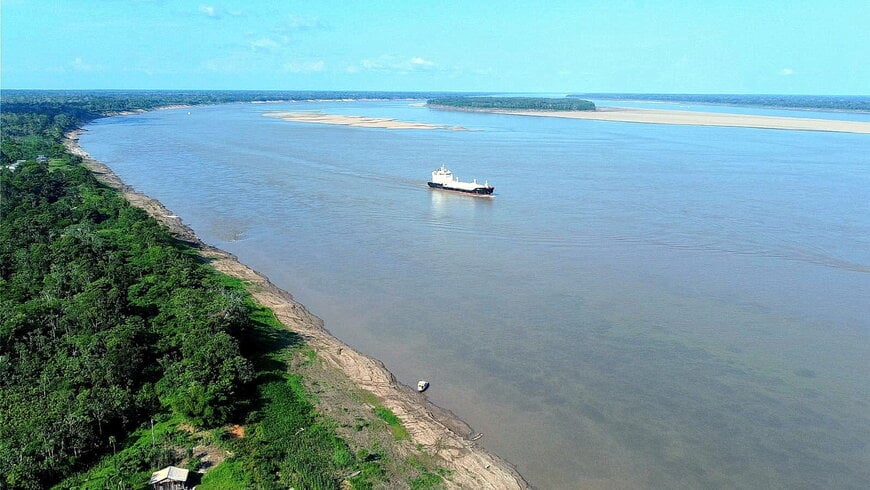
A technical and operational partnership between Transpetro, Petrobras, and the Brazilian Navy has established a contingency plan to maintain waterway transport of liquefied petroleum gas and crude oil during the dry season in the Amazon Basin. This system supports regional energy infrastructure by ensuring continuous output from the Urucu cluster and securing fuel supply for Amazonas thermal power generation.
Hydrological Challenges and Multidisciplinary Cooperation
Seasonal declines in Amazon river levels impose severe draft constraints, restricting navigability in critical channels and threatening the consistency of fluvial fuel distribution. To mitigate the risk of logistical disruption, a multidisciplinary committee combines hydrological data analysis with bulk liquid and gas cargo movement planning.
Coordination between Petrobras, responsible for production and supply, and Transpetro, handling multimodal pipeline operations and coastal shipping, addresses the complexity of navigating limited operational windows. The Brazilian Navy supports navigational safety under a technical agreement covering bathymetric surveys of critical river segments and naval convoy monitoring.
Logistics Architecture and Asset Allocation
The operational approach involves staged early positioning of a dedicated fleet to offset transport capacity lost to shallow water depths. Transpetro deployed two dedicated liquefied gas carriers, the Gilberto Freyre and Jorge Amado, alongside gas carriers Oscar Niemeyer, Barbosa Lima Sobrinho, Darcy Ribeiro, and Lucio Costa, as well as oil tankers Sergio Buarque de Holanda, Romulo Almeida, and José Alencar.
To overcome onshore storage limitations, the Epic Baluan tanker was stationed in the municipality of Coari to serve as an extended floating storage unit. This setup expands local waterway terminal capacity, enabling continuous lightering and transfer operations without overloading fixed infrastructure.
"We initiated the necessary technical and operational evaluations to expand our logistics readiness. Territory expertise, continuous monitoring, and institutional integration are essential," stated Jones Soares, Director of Maritime Transport at Transpetro.
Operational Reliability and Energy Impact
The protocol safeguards thermal power generation in Amazonas, where natural gas from Urucu accounts for more than 50% of the state electricity grid.
Refined across severe drought cycles, this logistical contingency system relies on weekly hydrometeorological tracking to optimize vessel loading relative to minimum river levels. This preventive modeling avoids shut-ins at inland extraction wells and stabilizes the delivery of essential petroleum derivatives throughout northern Brazil's waterway network.
Edited by Evgeny Churilov, Induportals Media - Adapted by AI.
www.petrobras.com.br
