
www.oilgastechnology.com
04
'26
Written on Modified on
Petrobras Commences Early Production at Búzios 8 (P-79) Platform
Petrobras accelerated its energy strategy by launching the P-79 FPSO ahead of schedule, boosting pre-salt capacity to 1.33 million barrels daily through innovative integrated commissioning.
petrobras.com.br
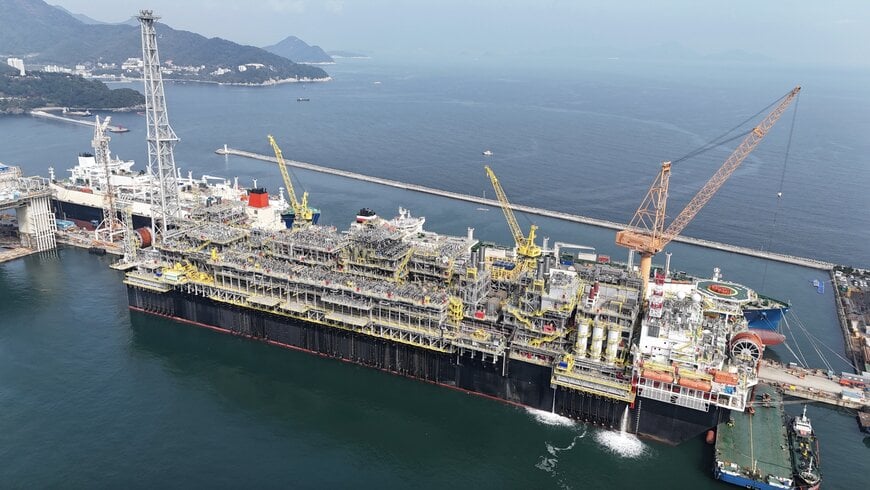
Petrobras has initiated production at the P-79 platform in the Santos Basin pre-salt layer as of May 1, 2026. This commencement occurred three months ahead of the schedule outlined in the 2026–2030 Business Plan and five months earlier than the preceding year's plan. As the eighth unit in the Búzios field, the P-79 has a daily capacity of 180,000 barrels of oil and 7.2 million cubic meters (m3) of gas compression.
Operational Readiness and Logistics Strategy
The P-79 arrived in Brazil from South Korea in February 2026 with commissioning and operations teams already on board. This transit strategy eliminated the requirement for stops in sheltered Brazilian waters, allowing for system commissioning to advance during the voyage. The project enables gas export to the mainland via the Rota 3 pipeline, potentially increasing the domestic gas supply by up to 3 million m3 per day.
Technical Infrastructure and FPSO Design
The P-79 is a Floating Production, Storage, and Offloading (FPSO) unit featuring a new hull design and technologies intended to reduce emissions. The Búzios 8 project comprises 14 wells—8 producers and 6 injectors—utilizing intelligent completion systems. The unit is integrated into the field via:
- Rigid pipelines for production, injection, and gas export.
- Flexible pipelines for specialized service lines.
Búzios Field Development Status
The Búzios field, discovered in 2010, is located 180 km off the coast of Rio de Janeiro at water depths exceeding 2,000 meters. The field currently operates several FPSOs, including the P-78, which began operations in December 2025. With the addition of P-79, the total installed capacity of the field reaches approximately 1.33 million barrels of oil per day. The field is managed by a consortium including Petrobras as operator, CNOOC, CNODC, and PPSA.
Additional Context
The early start-up of the P-79 highlights a technical shift toward "integrated transit commissioning," where complex systems are tested while the vessel is en route from the shipyard. Traditionally, FPSO units undergo lengthy commissioning periods in local shipyards upon arrival, which can be delayed by logistics or weather. By performing these tasks during the transoceanic voyage, Petrobras effectively compressed the timeline from delivery to first oil.
Technically, the "intelligent completion systems" mentioned are critical for managing the high-pressure, high-temperature environment of the pre-salt layers. These systems allow operators to monitor and control individual zones within a well remotely, optimizing the flow of oil while managing the injection of gas or water to maintain reservoir pressure. Furthermore, the use of rigid pipelines for high-capacity production is a calculated engineering choice to handle the extreme fatigue and hydrostatic pressure found at depths of 2,000 meters, ensuring the long-term structural integrity of the Búzios 8 subsea architecture.
Edited by Romila DSilva, Induportals Editor, with AI assistance.
The Búzios field, discovered in 2010, is located 180 km off the coast of Rio de Janeiro at water depths exceeding 2,000 meters. The field currently operates several FPSOs, including the P-78, which began operations in December 2025. With the addition of P-79, the total installed capacity of the field reaches approximately 1.33 million barrels of oil per day. The field is managed by a consortium including Petrobras as operator, CNOOC, CNODC, and PPSA.
Additional Context
The early start-up of the P-79 highlights a technical shift toward "integrated transit commissioning," where complex systems are tested while the vessel is en route from the shipyard. Traditionally, FPSO units undergo lengthy commissioning periods in local shipyards upon arrival, which can be delayed by logistics or weather. By performing these tasks during the transoceanic voyage, Petrobras effectively compressed the timeline from delivery to first oil.
Technically, the "intelligent completion systems" mentioned are critical for managing the high-pressure, high-temperature environment of the pre-salt layers. These systems allow operators to monitor and control individual zones within a well remotely, optimizing the flow of oil while managing the injection of gas or water to maintain reservoir pressure. Furthermore, the use of rigid pipelines for high-capacity production is a calculated engineering choice to handle the extreme fatigue and hydrostatic pressure found at depths of 2,000 meters, ensuring the long-term structural integrity of the Búzios 8 subsea architecture.
Edited by Romila DSilva, Induportals Editor, with AI assistance.
