
www.oilgastechnology.com
04
'26
Written on Modified on
Integrated Industrial Automation for LNG Facility Capacity Expansion
Yokogawa deploys integrated control and safety architectures to support the processing and storage infrastructure expansion at the LNG Canada facility.
www.yokogawa.com
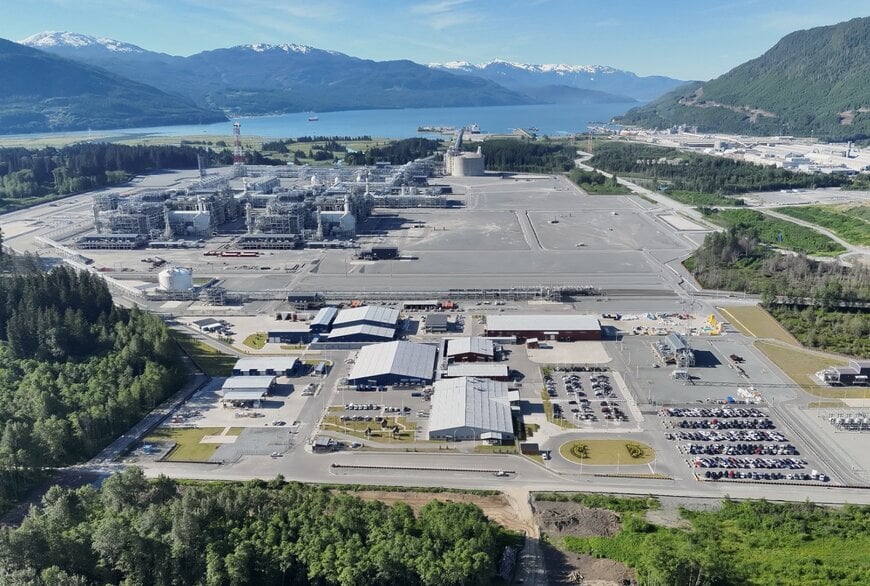
Yokogawa Electric Corporation is partnering with the JGC Fluor BC LNG II Joint Venture (JFJV2) to serve as the Main Automation Contractor for the LNG Canada Phase 2 expansion. This collaboration involves the deployment of integrated production control and safety instrumented systems for liquefied natural gas processing units.
Industrial Collaboration and Scale
JGC Corporation and Fluor Corporation, operating as JFJV2, manage the engineering, procurement, fabrication, and construction of the facility located in Kitimat, British Columbia. The Phase 2 expansion requires scaling the plant's digital infrastructure to integrate two new processing units, designated as Trains 3 and 4, along with an additional condensate tank, a liquefied natural gas storage tank, and a loading berth. This physical expansion doubles the facility’s production capacity from 14 to 28 million tons per annum. The partnership ensures that the new automation architectures align with the operational frameworks established during the plant's initial phase, which was completed in 2025.
System Architecture and Responsibilities
Under the agreement, Yokogawa is responsible for engineering and delivering the primary automation and safety networks. The core technical solution includes the CENTUM VP integrated production control system and the ProSafe-RS safety instrumented system. Furthermore, the scope of supply encompasses fire and gas monitoring networks, process historians for data logging, operator training simulators, asset management platforms, and the underlying cybersecurity infrastructure. JFJV2 maintains responsibility for the physical installation and integration of these systems into the broader utility and process engineering frameworks.
Implementation and Infrastructure Integration
The digital control solutions will be deployed to monitor and manage the new processing trains and their associated common utilities. The implementation strategy focuses on extending the automation platform already functioning in the first phase of the facility. By reusing established system architectures, control philosophies, and engineering standards, the project teams maintain technical consistency across the entire site. This methodology streamlines project execution and mitigates integration risks between the existing infrastructure and the new expansion modules.
Operational Impact
Extending a standardized automation platform provides a uniform control interface for facility operators and simplifies lifecycle maintenance procedures. The deployment of these integrated control solutions stabilizes process variables across the expanded footprint, ensuring continuous production while adhering to established industrial safety parameters. Using a unified system architecture across all processing trains also reduces the operational complexity of managing the enlarged facility.
Edited by Aishwarya Mambet, Induportals Editor, with AI assistance.
www.yokogawa.com
