
www.oilgastechnology.com
13
'26
Written on Modified on
Refinery Hydrocracking and Bottom Upgradation Modernization
Hindustan Petroleum Corporation Limited selected Technip Energies to deliver downstream process units resolving heavy-fraction conversion and lubricant stock quality at Mumbai Refinery.
www.ten.com
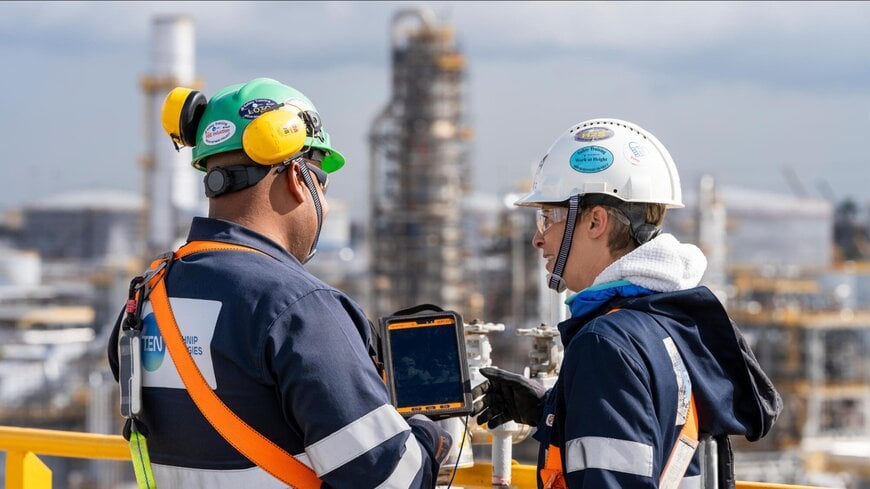
Technip Energies and Hindustan Petroleum Corporation Limited (HPCL) have entered an engineering, procurement, and construction contract for the Lube Modernization and Bottom Upgradation project at the Mumbai Refinery in Maharashtra, India. The engineering initiative deploys downstream catalytic conversion and residue upgrading systems to transform low-value hydrocarbon fractions into high-viscosity-index lube oil base stocks and refined fuel streams.
Operational Challenge and Partner Division
Refining margins depend heavily on the capability to convert heavy atmospheric and vacuum residues into market-specification outputs. Processing heavy refinery bottoms typically presents operational issues regarding catalyst deactivation, elevated sulfur concentrations, and high pour points in lubricant fractions. Addressing these limitations requires high-pressure catalytic architectures capable of selective cracking and molecular restructuring without destabilizing downstream operations.
Within this project, HPCL acts as the asset owner, integrating the new processing trains into its operational brownfield refinery footprint. Technip Energies manages full project execution, including detailed design, procurement of specialized pressure vessels and metallurgy, and mechanical construction.
Technical Architecture of the Processing Units
The technical scope centers on two downstream process plants designed to operate in sequence:
- The 550 KTA Integrated Hydrocracker and Catalytic Dewaxing (IHCD) unit operates under severe hydrogen partial pressure to crack heavy paraffinic feedstocks while selectively isomerizing wax molecules. This configuration lowers pour points and achieves targeted viscosity indexes for premium lubricant blending stocks.
- The 850 KTA Solvent Deasphalting (SDA) unit utilizes liquid-liquid hydrocarbon extraction to separate heavy residue feedstocks into deasphalted oil and high-carbon pitch fractions. The resulting deasphalted stream provides low-metal feedstock for downstream hydroprocessing, preventing downstream catalyst poisoning.
Integration and Industrial Implementation
The systems must tie directly into the operational utility, hydrogen supply, and offsite distribution headers of the active Mumbai facility. Executing high-pressure, high-temperature units within an operating plant requires phased civil installation, specialized heavy lifts for thick-walled hydroprocessing reactors, and scheduled interconnections to avoid disrupting current processing schedules. Technip Energies oversees the interface alignment between existing pipelines and the new process trains.
Operational Impact and Base Oil Output
The integrated units enable the Mumbai Refinery to increase yields of API Group II and Group III lube oil base stocks, which serve as foundational components for automotive lubricants and industrial lubrication formulations. By extracting deasphalted oils from residue streams, the facility improves overall crude conversion efficiency, lowers bottom-barrel fuel oil production, and optimizes downstream hydrogen utilization across the plant.
Regarding the technical delivery, Loïc Chapuis, President Project Delivery and Services at Technip Energies, noted that the project leverages technical expertise in complex refinery modernization to deliver the new units and secure operational integration with existing facilities.
Edited by Evgeny Churilov, Induportals Media - Adapted by AI.
www.ten.com
The systems must tie directly into the operational utility, hydrogen supply, and offsite distribution headers of the active Mumbai facility. Executing high-pressure, high-temperature units within an operating plant requires phased civil installation, specialized heavy lifts for thick-walled hydroprocessing reactors, and scheduled interconnections to avoid disrupting current processing schedules. Technip Energies oversees the interface alignment between existing pipelines and the new process trains.
Operational Impact and Base Oil Output
The integrated units enable the Mumbai Refinery to increase yields of API Group II and Group III lube oil base stocks, which serve as foundational components for automotive lubricants and industrial lubrication formulations. By extracting deasphalted oils from residue streams, the facility improves overall crude conversion efficiency, lowers bottom-barrel fuel oil production, and optimizes downstream hydrogen utilization across the plant.
Regarding the technical delivery, Loïc Chapuis, President Project Delivery and Services at Technip Energies, noted that the project leverages technical expertise in complex refinery modernization to deliver the new units and secure operational integration with existing facilities.
Edited by Evgeny Churilov, Induportals Media - Adapted by AI.
www.ten.com
