
www.oilgastechnology.com
09
'26
Written on Modified on
Offshore Gas Discovery at Gullfaks South Field
Equinor and OMV have proven recoverable gas reserves using existing wellbore architecture during offshore production operations in the North Sea.
www.equinor.com
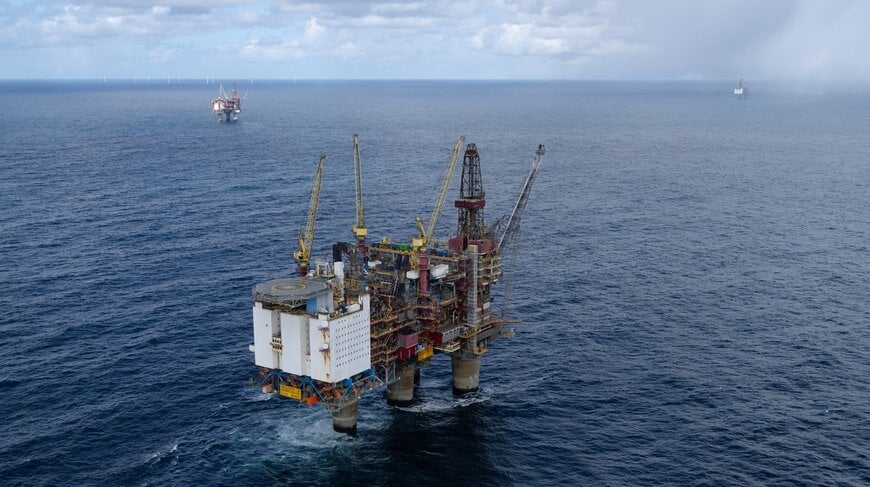
Equinor and license partners Petoro and OMV have verified recoverable natural gas resources at the Gullfaks South field, situated 190 kilometres northwest of Bergen in the Norwegian North Sea. The operation targeted near-field geological structures by utilizing existing drilling infrastructure during standard reservoir development, directly serving the upstream petroleum extraction sector.
Operational Context and Joint Venture Structure
Hydrocarbon exploitation across production licence 34/10 requires joint-venture coordination to balance reservoir management, development risk, and capital commitments. Equinor serves as the primary field operator, collaborating with state-owned entity Petoro and upstream operator OMV. Near-field exploration relies on identifying unmapped reservoir pockets adjacent to declining mature assets. In this framework, the joint partners coordinated geological appraisal alongside existing production tasks, eliminating the necessity to commission dedicated exploration surface rigs.
Technical Solution and Well Architecture
The exploration target was evaluated through the drilling of exploration well 34/10-D-4 BH. Technical execution utilized directional drilling methods to establish a sidetrack directly off a primary production wellbore. This architecture bypassed the capital expenditure and logistical planning associated with spudding an independent top-hole section from the seabed.
The offshore operations were executed using the category J jack-up drilling rig Askeladden. Running directional drilling strings from an established well slot reduced seabed footprint, drilling fluid volumes, and overall casing requirements, while securing downhole lithological evaluation in immediate proximity to producing reservoirs.
Resource Assessment and Infrastructure Integration
Subsurface evaluations confirm reservoir volumes estimated between 0.5 million and 1.6 million standard cubic metres of recoverable oil equivalents, which corresponds to 3.3 million to 10.3 million barrels of oil equivalent.
Because the discovery lies within the established Gullfaks production licence, integration into existing surface facilities requires minimal subsea alteration. Well 34/10-D-4 BH can be routed to the Gullfaks processing topsides via nearby gathering manifolds, providing immediate operational and cost efficiencies.
Strategic Impact on Field Depletion
Tie-in to mature field processing infrastructure stabilizes export rates, lowers per-unit operating costs, and maximizes recovery factors prior to decommissioning milestones.
“It is possible to make discoveries of this size with such cost-effective exploration wells. These barrels can help maintain activity and production on the Gullfaks field,” stated Gunnar Egge, Vice President for the Gullfaks field at Equinor.
The operational parameters demonstrated in well 34/10-D-4 BH confirm the technical viability of executing targeted sidetracks to extend mature offshore platform lifecycles and increase total hydrocarbon yield.
Edited by Evgeny Churilov, Induportals Media - Adapted by AI.
www.equinor.com
