
www.oilgastechnology.com
06
'26
Written on Modified on
Membrane Electrode Assembly Industrial Production for Hydrogen Technologies
UFI Hydrogen scales automated MEA and CCM manufacturing to eliminate production bottlenecks across heavy-duty fuel cells and electrolyzers.
www.ufifilters.com
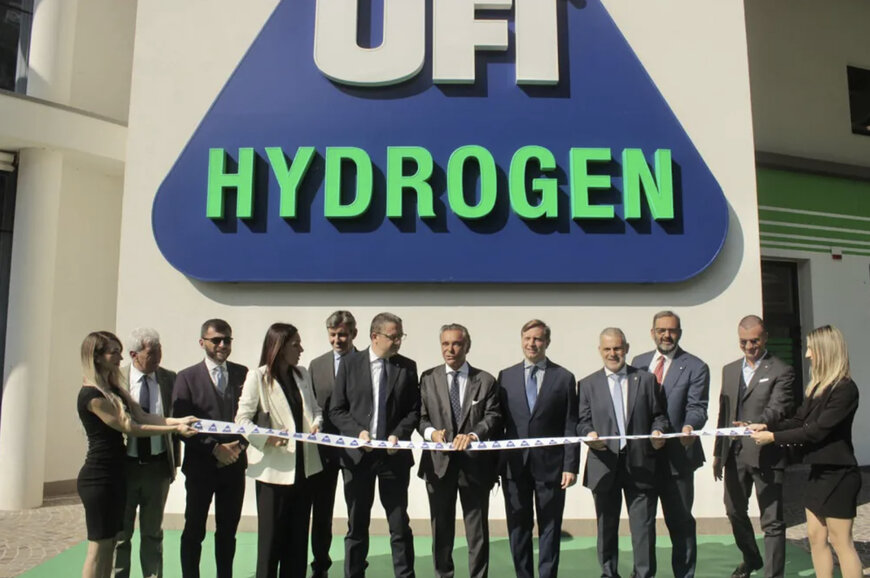
Commercial scaling of green hydrogen systems requires automated manufacturing processes for electrochemical core components that optimize catalyst deposition while maintaining cell durability under high current densities. To address these manufacturing constraints, UFI Hydrogen inaugurated its industrial and technological facility in Serravalle di Ala on September 25, establishing production lines for membrane electrode assemblies and catalyst coated membranes across electrolysis and fuel cell applications.
Industrializing Electrochemical Core Components for High-Volume Energy Systems
Electrochemical energy conversion hinges on the membrane electrode assembly, the laminated core structure where catalytic splitting and recombination of hydrogen and oxygen molecules take place. Historically, the fabrication of membrane electrode assemblies and catalyst coated membranes faced scalability hurdles, often relying on discontinuous, batch-oriented methods that limited stack assembly throughput and increased production costs.
The Serravalle di Ala facility transitions laboratory-stage electrochemistry into high-volume manufacturing. UFI Hydrogen originated from research and development initiatives launched in 2017 by the UFI Innovation Center, culminating in the establishment of the dedicated company in 2023. Supported by a planned capital expenditure of approximately 50 million euros scheduled through 2029, the site provides a consolidated 14,000-square-meter footprint with 6,000 square meters of covered industrial space. The site, which commenced initial operations in the first quarter of 2025, integrates materials research, automated testing, prototyping, industrial assembly, and an engineering showroom. The technical workforce is projected to expand to approximately 100 specialists.
Four-Pillar Electrochemical Platform and Scalable Roll-to-Roll Processing
The engineering roadmap at UFI Hydrogen centers on four electrochemical domains: hydrogen generation via water electrolysis, electricity generation using fuel cells, electrochemical carbon dioxide conversion for synthetic fuel formulation, and electrochemical hydrogen compression for distribution logistics. Each pathway depends on specialized membrane electrode assembly architectures configured with tailored catalyst formulations, porous transport layers, and ion-exchange membranes.
A critical factor in the company's manufacturing capability is its involvement in the European IPCEI Hy2Move initiative, a program supported by the European Commission to accelerate hydrogen mobility technologies. As the sole Italian enterprise selected for the program, UFI Hydrogen secured up to 22 million euros in project funding for its R2RMEA project. This initiative focuses on the industrialization of continuous roll-to-roll manufacturing processes for automotive and heavy-duty fuel cell assemblies. Continuous roll-to-roll slot-die coating replaces manual decal transfers, establishing uniform catalyst layer thickness, lowering coating defects, and accelerating production yields required for commercial stack integration.
Cross-Sector Integration from Transport to High-Density Power Infrastructure
Electrochemical energy systems are moving beyond light vehicles into high-load applications where battery energy density faces operational limits. The components produced at the Trentino site target heavy-duty transport, maritime operations, and energy-intensive manufacturing processes seeking decarbonization pathways.
Parallel engineering demands have emerged within continuous power environments, including high-performance computing centers, artificial intelligence compute clusters, industrial robotics, and unmanned aerial platforms. In these segments, fuel cell generators functioning on pure hydrogen provide decentralized, rapid-response base-load or backup generation independent of overloaded regional power transmission grids.
Regional Clean-Technology Cluster and Industrial Scaling Infrastructure
The industrial deployment in Serravalle di Ala forms part of a broader technological concentration in northern Italy. Located nearby, construction started on the Trentino Hydrogen Hub, an initiative led by the Autonomous Province of Trento in partnership with Fondazione Bruno Kessler and Trentino Sviluppo.
Representing an investment of approximately 50 million euros across a 25,000-square-meter campus, this infrastructure connects applied institutional research with industrial production facilities. The shared hub architecture targets the acceleration of pilot validation cycles for advanced fuel cells, electrolyzer stacks, and battery storage systems, validating component longevity under actual field operating cycles before high-volume commercial deployment.
Additional Context:
This section details technical specifications and competitive benchmarking not included in the original product announcement.
In proton exchange membrane fuel cells and water electrolyzers, catalyst coated membranes and membrane electrode assemblies serve as the rate-limiting cost and performance component. Industry benchmarks for proton exchange membrane fuel cells require cathode platinum group metal loadings below 0.2 milligrams per square centimeter to meet automotive cost targets established by the European Clean Hydrogen Partnership, while maintaining cell area-specific power densities exceeding 1.5 to 2.0 watts per square centimeter at operational potentials above 0.65 volts. For proton exchange membrane water electrolysis, reducing anodic iridium oxide catalyst loading from traditional levels of 1.5 to 2.0 milligrams per square centimeter down to less than 0.4 milligrams per square centimeter represents the primary engineering threshold for gigawatt-scale stack deployment.
Continuous roll-to-roll coating processes, such as the architecture targeted under the R2RMEA program, directly coat catalyst ink formulations onto reinforced perfluorosulfonic acid membranes. Compared with batch spray deposition or multi-step thermal decal transfer laminations, continuous slot-die roll-to-roll lines can achieve web processing speeds surpassing several meters per minute while maintaining catalyst layer thickness tolerances within plus or minus 5 percent. This production consistency directly mitigates local current hot spots and membrane degradation during transient operating cycles.
Within the global merchant market for electrochemical membranes and catalyst coated assemblies, established producers include W. L. Gore and Associates, Johnson Matthey, and Toray Industries. These manufacturers utilize proprietary automated coating lines to supply standard and customized membrane electrode assemblies to fuel cell stack integrators. The development of specialized merchant capacity within the European Union through programs such as IPCEI Hy2Move addresses supply chain resilience by establishing domestic roll-to-roll coating capacity, reducing reliance on third-party offshore converters for critical electrochemical components.
Edited by Natania Lyngdoh, Induportals editor, with AI assistance.
www.ufifilters.com
