
www.oilgastechnology.com
02
'26
Written on Modified on
KBR’s ROSE Process Successfully Commissioned at HPCL Refinery
Marking its latest milestone, ROSE technology has been successfully commissioned by Hindustan Petroleum Corporation Limited Visakhapatnam (HPCL Visakh) refinery at its new residue upgradation facility (RUF).
www.kbr.com
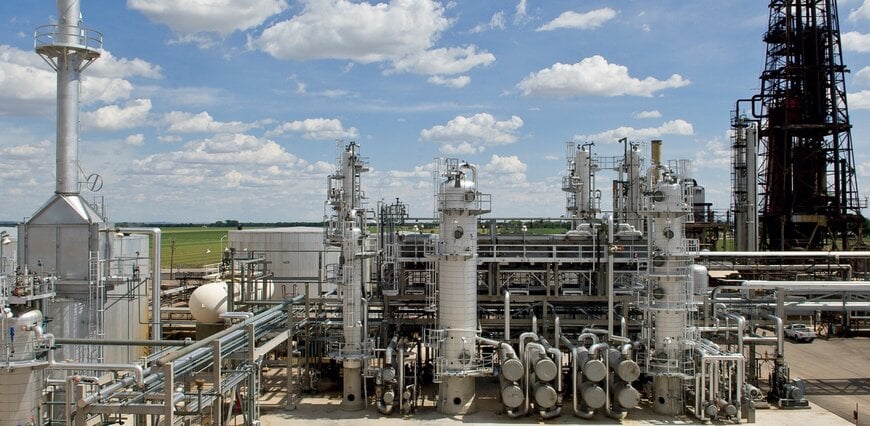
KBR has announced the successful commissioning of its proprietary ROSE® (Residuum Oil Supercritical Extraction) technology at the Hindustan Petroleum Corporation Limited (HPCL) refinery in Visakhapatnam (Visakh), India. The installation is integrated within the facility's new residue upgradation facility (RUF) to optimize the conversion of heavy refinery residues into lighter petroleum fractions.
Institutional Adoption and Capacity Specifications
The deployment at the Visakhapatnam facility represents an expansion of HPCL's use of KBR's solvent deasphalting (SDA) process technology portfolio. HPCL initially selected the ROSE technology framework in 2009 to modernize and upgrade its existing standalone solvent deasphalting unit at the Mumbai refinery.
Following the operational performance of the initial installation, HPCL selected the vendor to license a 24,530 barrels per stream day (BPSD) capacity ROSE unit for its Visakh infrastructure. This deployment aims to support long-term refining asset optimization and value creation across the multi-unit complex.
High-Yield Bottom-of-the-Barrel Conversion
The custom engineering of the high-yield ROSE solvent deasphalting unit allows the residue upgradation facility to extract higher-value petroleum products from low-value, bottom-of-the-barrel streams. The physical separation plant is configured to process and convert approximately 93 percent of the heavy residue feedstocks.
This high conversion efficiency is projected to expand the absolute distillate yields at the Visakh refinery while increasing baseline gross refining margins. Functioning as a core component of India’s first commercial residue hydrocracking unit, the project establishes a landmark reference for the technical integration of supercritical fluid extraction technologies.
Gary Godwin, Vice President of Energy Products and Services at KBR, stated that the repeat selection reflects the long-term performance and field reliability of the technology. Godwin noted that the organization remains focused on advancing refining and clean fuels solutions to match evolving global market criteria while adapting to the unique requirements of next-generation refinery architectures. The vendor maintains a greater than 90 percent market share within the supercritical solvent deasphalting sector, with a global combined licensed capacity approaching 1.8 million barrels per stream day across a customer network that includes numerous repeat licensees. The underlying process is continuously enhanced, providing multiple distinct process flow schemes to support optimal integration with both grassroots installations and pre-existing brownfield facilities.
Additional Context
This section details technical specifications not included in the original news release.
The Residuum Oil Supercritical Extraction (ROSE) process is an advanced, energy-efficient variation of solvent deasphalting (SDA) that relies on the thermodynamic behavior of solvents near or above their critical temperature and pressure thresholds. In conventional solvent deasphalting, heavy vacuum residuum feedstocks are mixed with light hydrocarbon solvents—typically propane, butane, or pentane—to separate paraffinic deasphalted oil (DAO) from heavy, highly aromatic asphaltene fractions based on solubility deltas. Traditional plants require vast amounts of thermal energy to distill and vaporize the solvent away from the extracted oil phase, followed by intensive cooling to condense the solvent back into a liquid state for reuse.
The supercritical process eliminates this energy-intensive phase-change loop by operating the solvent recovery section above the solvent's specific critical point. At supercritical conditions, the liquid and gas phases of the fluid become indistinguishable, and the solvent's density and solvating power drop sharply with minor temperature adjustments. Inside the ROSE separator vessel, the temperature of the solvent-DAO mixture is elevated slightly above the critical threshold; the solvent loses its ability to hold the oil in solution, causing the deasphalted oil to precipitate out as a distinct liquid phase.
The near-density solvent can then be drawn off from the top of the vessel and recycled directly back to the primary extractor as a dense fluid without passing through a latent heat of vaporization or condensation cycle. This reduces utility steam consumption and cooling water loads by up to 60% compared to traditional evaporation-based separation units, optimizing process efficiency within high-capacity residue hydrocracking configurations.
Edited by Romila DSilva, Induportals Editor, with AI assistance.
www.kbr.com
