
www.oilgastechnology.com
06
'26
Written on Modified on
Subsea Gas Field Integration for North Sea Energy Infrastructure
Equinor and ORLEN Upstream Norway AS have completed a subsea tie-back of the Eirin field to the Gina Krog platform to enhance gas export capacity.
www.equinor.com
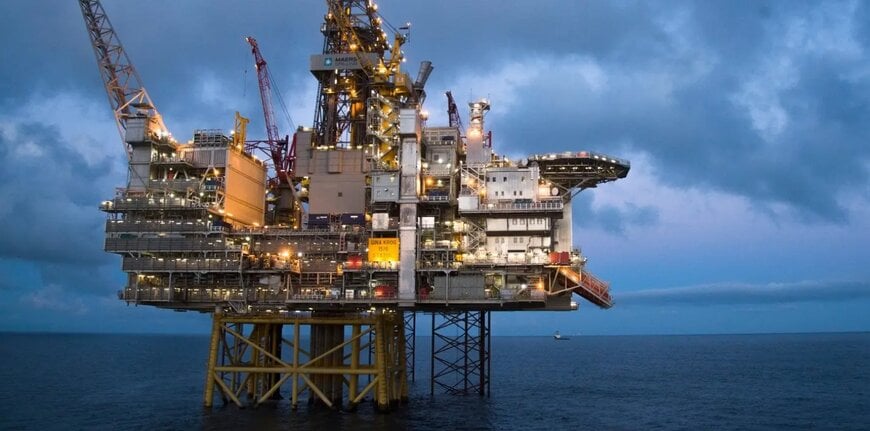
The Eirin gas field has commenced production, utilizing a subsea-to-platform tie-back system to transport hydrocarbons through existing North Sea infrastructure. This development integrates marginal reserves into the European energy supply chain by leveraging the Gina Krog and Sleipner A processing hubs.
Cooperation Context and Field Specifications
The project is a joint venture between Equinor (58.7%, operator) and ORLEN Upstream Norway AS (41.3%). Originally discovered in 1978, the Eirin field—located 250 kilometers west of Stavanger at a water depth of 120 meters—remained undeveloped for decades due to economic constraints.
In 2023, the partners reassessed the field’s viability, driven by increased demand for regional digital infrastructure and energy security. The cooperation was required to manage the technical complexity of deep-reservoir extraction (4,000 meters) and to ensure the commercial feasibility of a marginal discovery through shared investment and existing asset optimization.
Technical Solution and Infrastructure Integration
The development employs a subsea template with two slots, tied back directly to the Gina Krog platform. This modular approach allowed the partners to move from project establishment in January 2023 to production in three years.
Technical responsibilities and system functions include:
- Production and Processing: Extracted gas and liquids are routed to Gina Krog for initial handling before being transferred to the Sleipner A hub.
- Export Logistics: Gas is exported via the Gassled pipeline system, while liquids are transported to the Kårstø processing plant.
- Standardization: The partners utilized standardized subsea solutions and reused mature technology to reduce engineering lead times.
- Scalability: The architecture utilizes existing risers and is designed to facilitate future step-by-step expansions or the tie-in of additional satellite discoveries in the area.
Operational Impact and Sustainability
The implementation of the Eirin tie-back extends the economic life of the Gina Krog platform from 2029 to 2036. By utilizing Gina Krog’s 2023 electrification infrastructure, the Eirin field operates with a reduced carbon footprint, maintaining emissions at approximately 3 kg of CO2 per barrel of oil equivalent.
The project demonstrates a high-efficiency model for industrial automation in offshore environments, achieving an investment decision within 4.5 months. Recoverable resources are estimated at 27.6 million barrels of oil equivalent. This collaboration establishes a technical benchmark for the rapid development of marginal fields through early-phase integration and the utilization of electrified host platforms.
Edited by Evgeny Churilov, Induportals Media - Adapted by AI.
www.equinor.com
The implementation of the Eirin tie-back extends the economic life of the Gina Krog platform from 2029 to 2036. By utilizing Gina Krog’s 2023 electrification infrastructure, the Eirin field operates with a reduced carbon footprint, maintaining emissions at approximately 3 kg of CO2 per barrel of oil equivalent.
The project demonstrates a high-efficiency model for industrial automation in offshore environments, achieving an investment decision within 4.5 months. Recoverable resources are estimated at 27.6 million barrels of oil equivalent. This collaboration establishes a technical benchmark for the rapid development of marginal fields through early-phase integration and the utilization of electrified host platforms.
Edited by Evgeny Churilov, Induportals Media - Adapted by AI.
www.equinor.com
