
www.oilgastechnology.com
19
'26
Written on Modified on
Equinor Barents Sea Discovery Boosts Resources At Johan Castberg Field
Equinor has identified a new oil discovery in the Polynya Tubåen prospect, adding up to 24 million barrels to strengthen the Johan Castberg development.
www.equinor.com
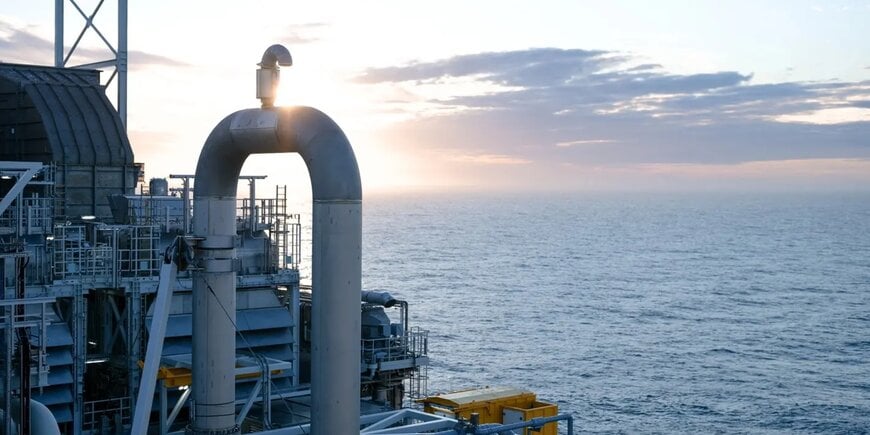
The recent Snøras oil discovery in the Barents Sea strategically differentiates Equinor’s Arctic operations by leveraging existing infrastructure to maximize recovery while maintaining a lower cost profile than fragmented greenfield developments. By securing additional high-value volumes within tie-back distance of the Johan Castberg field, the project achieves a faster time-to-market and a reduced carbon footprint per barrel compared to isolated deepwater competitors. This hub-centric approach allows for the efficient integration of smaller discoveries that might otherwise be economically unviable, ensuring the long-term industrial sustainability of the Johan Castberg area.
Strategic Location and Volume Estimates
Equinor and its partners, Vår Energi and Petoro, successfully identified oil in the Snøras prospect through the drilling of exploration well 7220/2-2, located approximately 10 kilometers northwest of the Johan Castberg field. Preliminary calculations suggest the discovery contains between 12.5 and 37 million barrels of recoverable oil. The drilling operation was conducted using the Transocean Enabler rig in a water depth of 430 meters. This discovery is particularly significant as it marks the first well in a multi-well exploration campaign designed to increase the resource base around the Johan Castberg floating production, storage, and offloading vessel.
Infrastructure Synergy and Development Logistics
The technical viability of the Snøras discovery relies on its proximity to the Johan Castberg infrastructure, which is currently scheduled to commence production later in 2026. Because the find is located within the same license (PL 532), it can be developed as a subsea tie-back. This method utilizes the existing processing capacity of the FPSO, significantly reducing the need for new large-scale surface installations. By focusing on near-field exploration, the partnership reduces the geological risk and capital intensity typically associated with Arctic oil and gas extraction.
Geological Insights and Future Exploration
The exploration well targeted two distinct geological formations: the Stø and Nordmela formations from the Early to Middle Jurassic period. While the primary target in the Stø formation yielded approximately 40 meters of oil-bearing reservoir with good quality, the secondary target in the Nordmela formation was found to be water-bearing. Data collected from the site, including extensive logging and some coring, will be used to refine the understanding of the area's potential. Following the completion of the Snøras well, the drilling rig is moving to the nearby Fossekall prospect to continue the exploration program aimed at further bolstering the Johan Castberg resource hub.
Edited by Evgeny Churilov, Induportals editor - Adapted by AI.
www.equinor.com
