
www.oilgastechnology.com
12
'26
Written on Modified on
Equinor Announces Two Significant Commercial Discoveries In The North Sea
The company identified oil and gas near existing infrastructure in the Troll and Sleipner areas, strengthening energy exports to Europe through efficient field tie-backs.
www.equinor.com
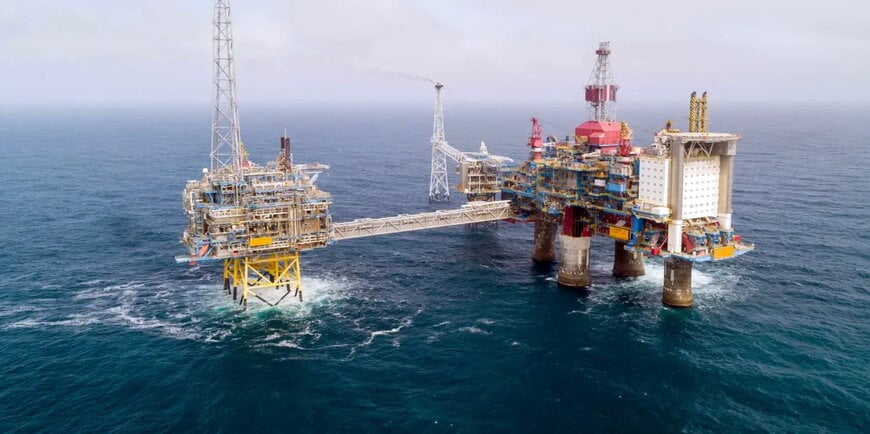
In response to growing energy demands and the transition toward more efficient extraction, many are asking how energy companies are staying competitive in mature basins like the North Sea. The recent commercial discoveries by Equinor in the Troll and Sleipner areas provide a clear answer: the advantage lies in "near-field" exploration and advanced seismic imaging.
How Infrastructure-Led Exploration Sets a New Standard
Equinor’s strategy focuses on finding resources in the immediate vicinity of existing platforms, a method that significantly differentiates its operations from competitors who may pursue more distant, "greenfield" projects. By discovering the Byrding C oil prospect (4–8 million barrels) and the Frida Kahlo gas find (5–9 million barrels) just kilometers from established hubs, Equinor can bring these resources to market with unparalleled speed. For instance, the Frida Kahlo well is expected to begin production as early as April, just weeks after its discovery—a timeline virtually impossible for remote offshore developments.
The Role of Advanced Subsurface Technology
A key driver behind this success rate—which exceeds 70% in the extended Troll area—is the implementation of sophisticated imaging technologies. The use of Ocean Bottom Node (OBN) and 4D seismic data, combined with the reprocessing of historical datasets, allows for a high-definition understanding of the subsurface. This technological edge enables the identification of smaller, "hidden" pockets of hydrocarbons in mature fields that were previously overlooked, ensuring that existing infrastructure remains profitable and productive for years to longer than originally projected.
Strategic Impact on European Energy Security
The integration of these new volumes into the Sleipner and Troll hubs reinforces Norway's role as a cornerstone of European energy supply. Sleipner serves as a vital transport hub, delivering dry gas directly to European markets and serving as a processing center for multiple surrounding fields. By continuously feeding these hubs with smaller, low-cost "tie-back" discoveries like the four recent finds in the Sleipner area (estimated at 55–140 million barrels combined), Equinor maintains a competitive cost structure while securing the reliable energy deliveries that Europe requires.
This approach not only maximizes the value of previous infrastructure investments but also reduces the environmental footprint of new production, as it utilizes existing facilities rather than requiring the construction of new, carbon-intensive platforms.
Edited by an industrial journalist, Evgeny Churilov
https://www.equinor.com/
