
Indeeco explains why custom circulation heaters outperform standard designs
Stephen Lincks, Vice President of Engineering at Indeeco, shares insights on optimizing custom circulation heater design.
indeeco.com
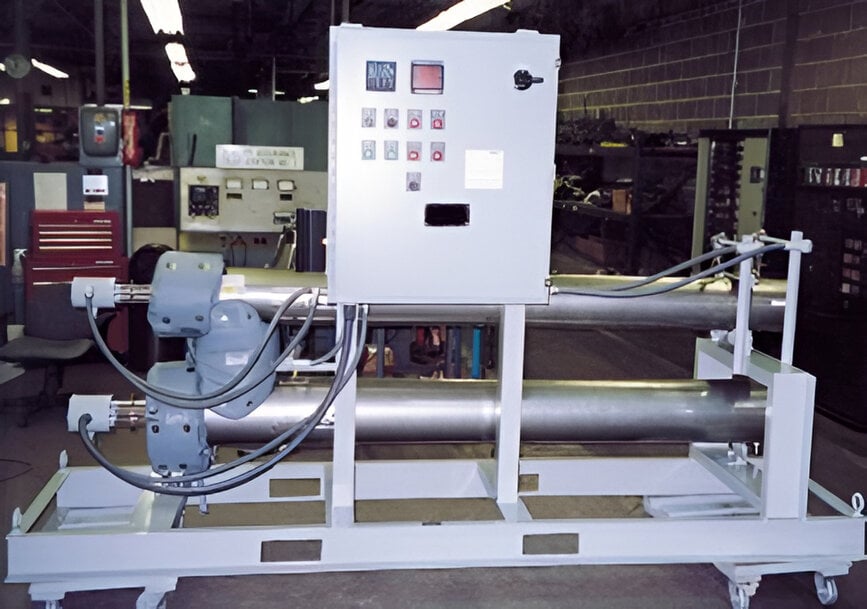
In industrial process heating applications — from water and oil heating to specialty gases and oil & gas production — electric circulation heaters are widely used for their efficiency and controllability. However, long-term reliability depends heavily on how well the heater is matched to the specific application. Custom-engineered circulation heaters consistently outperform off-the-shelf solutions by addressing critical design variables that directly impact performance, safety and equipment lifespan.
Watt density: the foundation of reliable heat
One of the most important design factors in any circulation heater is watt density — the heat output per unit surface area of the heating element. Proper watt density ensures efficient heat transfer and extended element life. If it is too high, the risks include fluid carbonization, chemical breakdown, overheating and premature element failure.
Process applications vary significantly. Heating chocolate, crude oil, turbine lube oil, cryogenic fluids or high-pressure natural gas each requires a different thermal approach. In oil and gas environments, circulation heaters are used for crude processing, hydrate prevention, pipeline heating and viscosity control. Each application demands precise temperature control to prevent fluid degradation while maintaining operational throughput and equipment protection.
A properly specified heater accounts for:
- Minimum and maximum flow rates
- Operating pressure
- Target outlet temperature
- Fluid properties such as viscosity, specific heat and thermal conductivity
- Maximum allowable sheath temperature
Designing around these parameters protects the process fluid, reduces maintenance and ensures long-term system efficiency.
Fluid dynamics: managing heat transfer and preventing hotspots
Fluid flow behavior plays a critical role in heat transfer. Turbulent flow — characterized by mixing and velocity fluctuations — enhances heat transfer by rapidly carrying heat away from the element surface. This minimizes the risk of hotspots, which can cause scale buildup, fluid breakdown and shortened element life.
In contrast, laminar flow features smooth, layered fluid movement with limited mixing. This creates a thin boundary layer around the heating element where heat transfer is less effective, increasing the risk of localized overheating. While theoretical laminar flow can occur in long, uninterrupted pipes, most circulation heaters are compact and include internal supports or baffles that disrupt ideal laminar conditions.
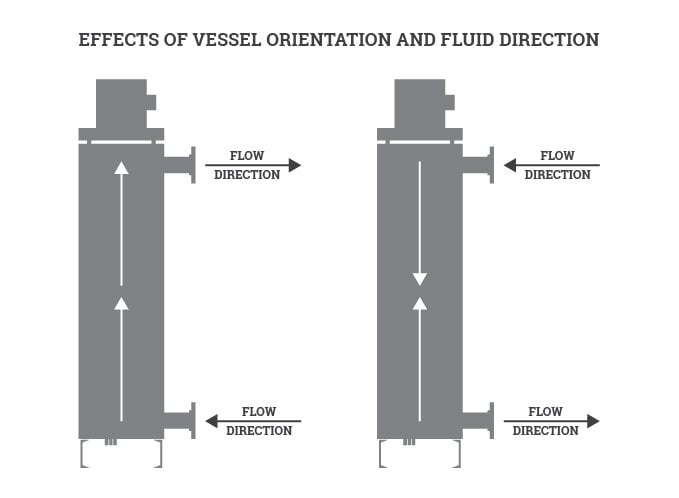
Most industrial heaters operate in a transitional flow regime, where fluid behavior shifts between laminar and turbulent. Because of this, heater design must carefully consider:
- Vessel orientation (horizontal or vertical)
- Flow direction
- Internal baffles or spacers
- Pressure and temperature fluctuations
Thoughtful internal geometry can promote turbulence where needed, improving temperature uniformity — especially in oil and gas separator heating or pipeline applications where preventing paraffin or hydrate formation is critical.
CAD modeling enables precision engineering
Advanced heater manufacturers leverage computer-aided design (CAD) and simulation tools to model thermal performance before fabrication. These tools analyze heat transfer, pressure drop and fluid movement under real-world conditions, including startup and peak load scenarios.
This modeling is particularly important in gas heating applications, where temperature changes significantly affect gas pressure, viscosity and thermal conductivity. Improper design can lead to excessive pressure drop, inefficient heating or unsafe operating conditions. Radiant heat effects from heating elements must also be carefully evaluated to prevent unintended temperature spikes or component damage.
By optimizing design variables digitally, engineers can balance heat transfer efficiency with system safety — producing heaters tailored to demanding industrial environments.
Heater design requires collaboration
Designing a high-performance circulation heater is not a catalog selection process — it is a collaborative engineering effort. Effective solutions integrate knowledge of fluid mechanics, thermal science, materials and real-world application demands.
Indeeco, a leader in electric heating technologies, specializes in custom-engineered circulation heaters built to meet complex industrial requirements. Its engineering team works closely with customers to analyze operating conditions, simulate performance and optimize heater configuration for reliability, efficiency and longevity.
Custom solutions deliver long-term value
While standard heaters may appear cost-effective initially, they often fail to account for critical performance variables. Custom-designed circulation heaters provide:
- Improved energy efficiency
- Reduced downtime
- Extended equipment life
- Enhanced fluid protection
- Greater process control
In industries such as oil and gas, petrochemicals, food processing and manufacturing, these advantages translate into measurable operational and financial benefits.
By partnering with a manufacturer that understands the interplay between thermal design and process conditions, engineers and facility operators can ensure safe, efficient heating performance from commissioning through years of operation.
www.indeeco.com
