
www.oilgastechnology.com
12
'23
Written on Modified on
SEC, ALFANAR CONSTRUCTION, AND GE VERNOVA SWITCH PP10 FROM RUNNING ON LIQUID FUELS TO NATURAL GAS
By running on natural gas instead of liquid fuel, the 20 units are expected to reduce up to 1.7 million fewer tons of carbon dioxide emissions per year for the same amount of power generated.
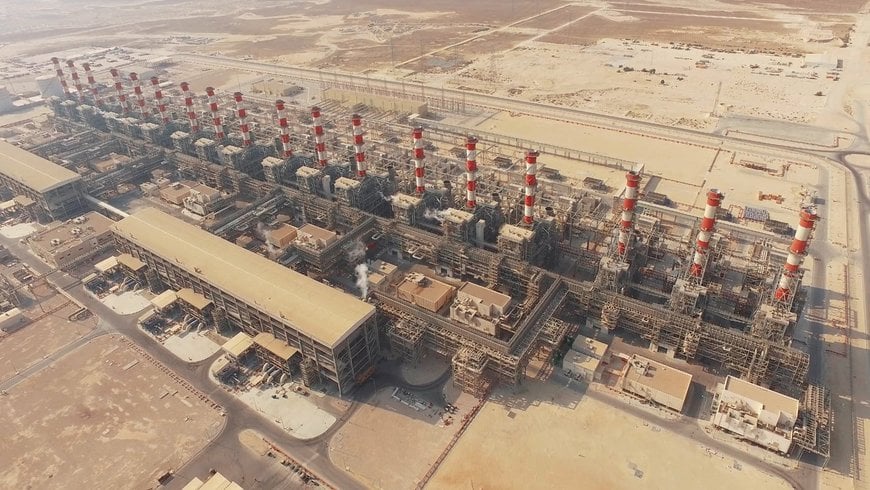
SEC's PP10 power plant (Credit: SEC)
GE Vernova’s Gas Power business announced it has begun the execution of the fuel conversion project for Saudi Electricity Company’s (SEC’s) Power Plant 10 (PP10), in Riyadh, marking a significant step in Saudi Arabia’s carbon emissions reduction goals. By switching the turbines from running on liquid fuels to natural gas, which has the lowest carbon emissions of traditional fossil fuels, the project will enhance the units’ fuel flexibility, efficiency, and output.
Built on an area of 5 million square meters outside the capital of Saudi Arabia, PP10 is powered by 40 of GE Vernova’s 7E gas turbines in a combined cycle configuration and is one of the largest combined cycle plants in the world. It can deliver approximately 3.5 gigawatts (GW) of electricity, the equivalent capacity needed to power up to 875,000 homes in Saudi Arabia.
Following project completion, each gas turbine’s efficiency is expected to increase, which results in lower consumption and cost of fuel per megawatt-hour (MWh) of power generated, and greater electricity output per unit of fuel consumed. Additionally, the units would be able to deliver more flexible power that can be ramped up or down as and when needed, while benefitting from longer inspection intervals, and longer parts life compared to gas turbines powered by liquid fuels. Furthermore, existing and future gas power plants can avoid carbon dioxide lock-in by using low or near-zero-carbon fuels such as hydrogen, combined with carbon capture technologies, both of which the Kingdom is beginning to make significant investments in.
This modernization will also leverage the expertise and know-how built at GE Saudi Advanced Turbines (GESAT), a joint investment by Dussur and GE Vernova to manufacture heavy-duty gas turbines and components in the Kingdom. GESAT is manufacturing gas fuel skids for the project, which consist of control valves, piping, and accessories that help manage the flow and pressure of gas supplied to the turbines.
The 7E gas turbine is a robust, proven platform that delivers high availability and reliability. It has a large installed base of over 1,150 units globally, with more than 270 turbines located in Saudi Arabia. The successful completion of this project can potentially provide learnings that can be applied to convert other 7E units running on liquid fuels across the Kingdom to operate on lower-carbon natural gas.
GE Vernova’s Gas Power business announced it has begun the execution of the fuel conversion project for Saudi Electricity Company’s (SEC’s) Power Plant 10 (PP10), in Riyadh, marking a significant step in Saudi Arabia’s carbon emissions reduction goals. By switching the turbines from running on liquid fuels to natural gas, which has the lowest carbon emissions of traditional fossil fuels, the project will enhance the units’ fuel flexibility, efficiency, and output.
Built on an area of 5 million square meters outside the capital of Saudi Arabia, PP10 is powered by 40 of GE Vernova’s 7E gas turbines in a combined cycle configuration and is one of the largest combined cycle plants in the world. It can deliver approximately 3.5 gigawatts (GW) of electricity, the equivalent capacity needed to power up to 875,000 homes in Saudi Arabia.
Following project completion, each gas turbine’s efficiency is expected to increase, which results in lower consumption and cost of fuel per megawatt-hour (MWh) of power generated, and greater electricity output per unit of fuel consumed. Additionally, the units would be able to deliver more flexible power that can be ramped up or down as and when needed, while benefitting from longer inspection intervals, and longer parts life compared to gas turbines powered by liquid fuels. Furthermore, existing and future gas power plants can avoid carbon dioxide lock-in by using low or near-zero-carbon fuels such as hydrogen, combined with carbon capture technologies, both of which the Kingdom is beginning to make significant investments in.
This modernization will also leverage the expertise and know-how built at GE Saudi Advanced Turbines (GESAT), a joint investment by Dussur and GE Vernova to manufacture heavy-duty gas turbines and components in the Kingdom. GESAT is manufacturing gas fuel skids for the project, which consist of control valves, piping, and accessories that help manage the flow and pressure of gas supplied to the turbines.
The 7E gas turbine is a robust, proven platform that delivers high availability and reliability. It has a large installed base of over 1,150 units globally, with more than 270 turbines located in Saudi Arabia. The successful completion of this project can potentially provide learnings that can be applied to convert other 7E units running on liquid fuels across the Kingdom to operate on lower-carbon natural gas.
www.ge.com
