
www.oilgastechnology.com
27
'26
Written on Modified on
Industrial Automation and AI in Oil and Gas
At Automa 2026 in Amsterdam, industry leaders examined artificial intelligence integration, digital twins, and control architectures to ensure operational safety.
automacongress.com
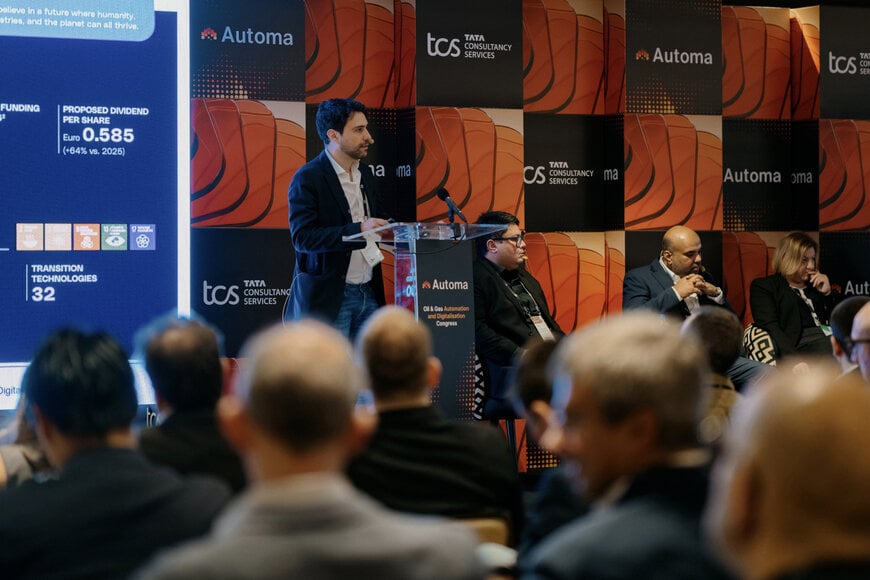
The Oil & Gas Automation and Digitalisation Congress (Automa) took place on 5 and 6 October 2026 in Amsterdam, the Netherlands, convening sector operators to examine industrial automation and digital infrastructure solutions. Discussions focused on deploying artificial intelligence, digital twins, and predictive maintenance frameworks across upstream, midstream, and downstream facilities.
Core Technology and System Architecture
Presentations examined layered system architectures combining machine learning algorithms with distributed control systems. Aninda Mukherjee of Tata Consultancy Services UK and Europe summarized the structural requirement: Intelligence without control is a risk. Control without intelligence is a ceiling. Industrial AI requires both. Under this framework, algorithms analyze sensor telemetry to identify equipment degradation patterns and advise operators, while existing control systems retain execution responsibility. PETROBRAS and Siemens detailed hybrid process models and virtual representations to optimize refinery throughput, while digital inventory systems from Fieldnode utilized standardized specifications to manage spare parts traceability.
Deployment or Implementation
Implementation strategies emphasized retrofitting existing industrial environments with edge-computing modules, wearable internet of things devices, and automated supervision tools. Companies including Shell, Linde, and OMV integrated governance protocols and hybrid models into capital project delivery and facility maintenance. Engineering firms such as Fluor and Saipem deployed advanced analytics and video monitoring systems to track construction progress at biorefineries and manage operational hazards without disrupting ongoing plant workflows.
Industry Applications
The deployed technologies targeted critical operational environments across oil refineries, chemical processing plants, and construction sites. Use cases included Repsol utilizing robots, cameras, and drones for automated plant supervision, and TotalEnergies implementing acoustic sensor systems for early gas leak detection. These applications targeted operational stability, personnel safety, and infrastructure reliability across capital-intensive facilities.
Operational Impact and Performance Metrics
Operational evaluations focused on measurable mechanisms to reduce unplanned downtime and improve asset integrity. Deployments demonstrated that combining algorithmic pattern recognition with deterministic safety loops reduced execution risks while maintaining strict environmental compliance. Furthermore, energy monitoring tools evaluated resource consumption during sustainability interventions, balancing efficiency gains against infrastructure energy requirements.
Registration and Outlook
Registration is open for the anniversary 10th edition of Automa, scheduled for 18 to 19 October 2027 in Vösendorf, Austria. Participants can secure registration through the official portal to exchange expertise with industry leaders and contribute to the next chapter of oil and gas automation and digitalisation.
Edited by Sucithra Mani, Induportals editor – adapted by AI
www.automacongress.com
