
www.oilgastechnology.com
17
'26
Written on Modified on
Evaluation of Wind-Assisted Towing for Offshore Production Vessels
STS Joint Venture, TotalEnergies, and Beyond the Sea will test a kite traction system to optimize marine infrastructure logistics during vessel transit.
www.sbmoffshore.com
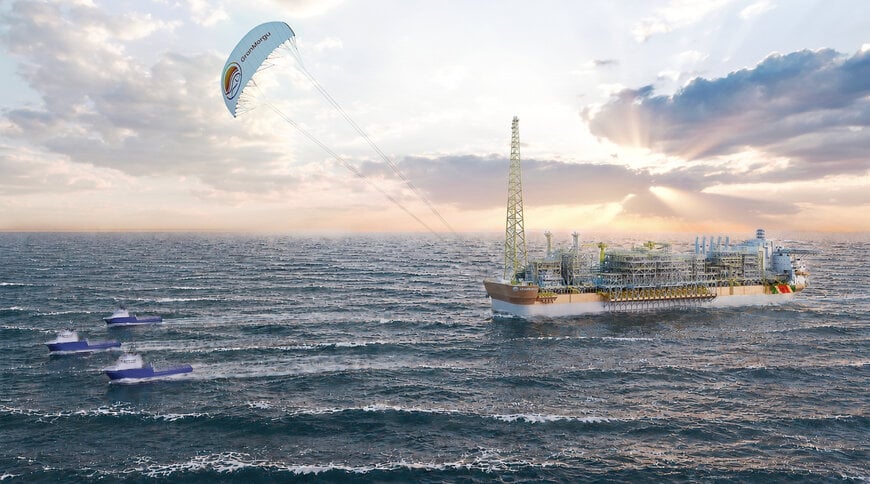
STS Joint Venture and TotalEnergies EP Suriname have partnered with Beyond the Sea to implement a Wind Assisted Towing System for the GranMorgu FPSO project. This collaboration targets the offshore energy sector, focusing on reducing fuel consumption during the transoceanic transit of large-scale production vessels.
Strategic Offshore Partnership
The initiative brings together STS Joint Venture, a partnership between SBM Offshore and Technip Energies, TotalEnergies EP Suriname, and marine propulsion specialist Beyond the Sea. The companies are addressing the high energy requirements and logistical challenges associated with towing large Floating Production Storage and Offloading units across long distances. This cooperation integrates Beyond the Sea's specialized traction technology with the operational framework of SBM Offshore and TotalEnergies to manage the specific risk and scale requirements of offshore logistics.
Wind-Assisted Traction Architecture
The technical solution centers on the SeaKite 2400 system, an automated kite traction mechanism designed to provide auxiliary propulsion based on wind conditions. Responsibilities are divided through a phased research and development approach. Beyond the Sea focuses on the core kite technology and wing launching mechanisms, while STS Joint Venture and TotalEnergies oversee the integration of the system onto the vessel hull and coordinate offshore risk management. The project utilizes digital modeling to optimize system sizing and establish safe recovery parameters for large-scale maritime applications.
Phased Implementation and Testing
The technology will be implemented in sequential phases, starting with technology qualification and an intensive onshore test program. Following these validations, the system will be integrated onto the GranMorgu vessel at its construction site in China. The operational deployment will occur during the towing phase from China to its final operational destination in Suriname. Progression through each phase requires meeting predefined technical and safety criteria specific to complex offshore infrastructure.
Marine Infrastructure Use Cases and Output
This application serves as a primary use case for evaluating auxiliary wind propulsion on non-standard, heavy-displacement offshore vessels. The deployment aims to validate the mechanical reliability of the wing launching and recovery system under operational maritime conditions. While specific fuel reduction percentages are pending the voyage data, the measurable mechanisms of automated kite traction are expected to decrease both the total towing duration and the reliance on conventional towing propulsion, enhancing the overall process stability and efficiency of the transit operation.
Edited by Natania Lyngdoh, Induportals editor, assisted by AI.
www.sbmoffshore.com
