
www.oilgastechnology.com
01
'26
Written on Modified on
SBM Offshore’s SWIR technology receives ABS Statement of Maturity
Seawater Intake Riser (SWIR) design complies with ABS safety and regulatory standards — a key step toward deployment.
www.sbmoffshore.com
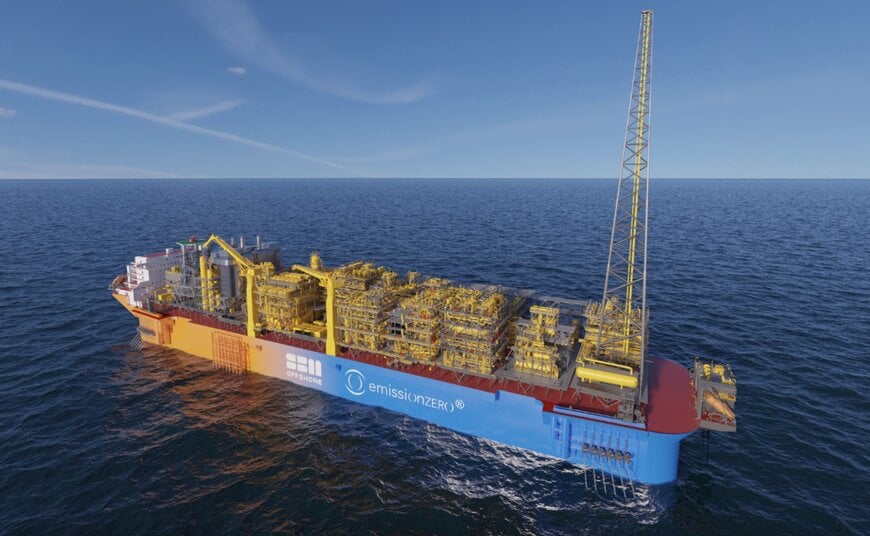
SBM Offshore announces that American Bureau of Shipping (ABS) has released the Statement of Maturity for its Seawater Intake Riser (SWIR) technology.
Innovative Cooling Solution for FPSOs
Developed in collaboration with Shell, the SWIR technology features an innovative technique that pumps colder seawater from approximately 700 meters below the ocean’s surface up to an FPSO’s topsides for cooling purposes.
Depending on process conditions and site characteristics, SWIR can use cold seawater for onboard process cooling and power generation. This improves energy efficiency while reducing fuel gas consumption and greenhouse gas emissions in offshore oil and gas production.
ABS Qualification and Validation
To evaluate the prototype design, ABS applied its New Technology Qualification (NTQ) program, a structured engineering approach used to systematically and consistently assess innovative solutions. The Statement of Maturity confirms that, following testing and validation, the technology is qualified to be incorporated into a production unit.
SWIR is an important step in the company's low-carbon roadmap: the project began as an in-house concept in 2014 and advanced through a multi-year, multi-party effort, including a development partnership with Shell and research input from academic institutes.
Additional Context
This section details technical specifications and competitive benchmarking not included in the original news release.
Offshore floating utility cooling is technically evaluated using normalized metric criteria focused on volumetric flow capacity (measured in cubic meters per hour), pipeline structural tension margins, and thermal insulation efficiency. Conventional surface-intake configurations rely on short, copper-nickel or super duplex stainless steel caissons that are immune to deepwater hydrostatic collapse but are severely limited by the high thermal profile of surface water, forcing topside heat exchangers to scale up in size and weight to handle heavy process loads.
The Seawater Intake Riser platform alters this traditional performance benchmark by substituting heavy metallic alloys with high-density polyethylene (HDPE) as the primary subsea conduit material. While standard flexible marine risers exhibit high dead-weight characteristics that exert high axial loads on the vessel balcony, the integrated high-density polyethylene riser pipe spans approximately 650 meters in length with an optimized internal diameter configured to handle high-velocity fluid flow. The low specific gravity of high-density polyethylene reduces the submerged net weight of the suspended cantilever string, minimizing structural load transfer to the riser head and external caisson interfaces attached to the hull.
Edited by Romila DSilva, Induportals Editor, with AI assistance.
www.sbmoffshore.com
