
www.oilgastechnology.com
16
'26
Written on Modified on
Subsea Infrastructure Expansion for Johan Sverdrup Phase 4
Equinor, Aker BP, Petoro, and TotalEnergies are maturing a new subsea tie-back development to optimize resource recovery in the North Sea.
www.equinor.com
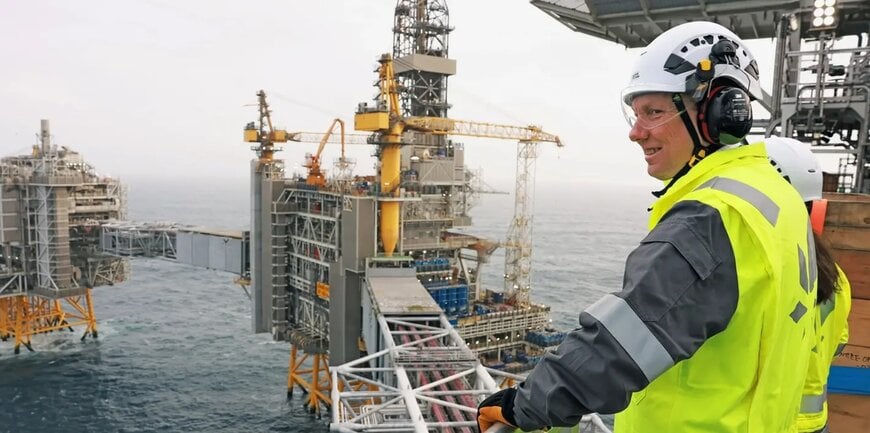
The industrial partnership operating the Johan Sverdrup Unit — comprising Equinor Energy AS (42.62%), Aker BP ASA (31.57%), Petoro AS (17.36%), and TotalEnergies EP Norge AS (8.44%) — is collaborating on the engineering phase of the Johan Sverdrup phase 4 development. The technical objective of this cooperative project is to integrate newly appraised reserves into the existing digital infrastructure and production hub of the Johan Sverdrup field, which serves as a major node for European energy supply.
Cooperation among these joint-venture partners is required to distribute the capital expenditure, manage subsurface technical risks, and align project execution with a unified regional development strategy. The project targets the extraction of volatile oil and associated gas from the northernmost section of the Geitungen terrace.
Technical Solution and Shared Infrastructure
The development plan utilizes a subsea tie-back architecture to connect new production wells to the existing Johan Sverdrup processing platforms. Subsea tie-backs involve installing seafloor template structures, manifolds, and production trees, which are then linked via subsea pipelines, flowlines, and control umbilicals to a host facility.
By utilizing existing processing capacities, the partnership eliminates the need for new surface hulls or major topside processing modules. Preliminary data from two appraisal wells and one sidetrack well in the Tonjer and Geitungen formations indicate a combined resource base estimated between 20 and 30 million barrels of oil equivalent. Continued analysis of core samples and downhole pressure data will refine the reservoir simulation models. Equinor, as the operator, leads the engineering design and subsurface modeling, while the partner companies provide technical verification and joint investment governance.
Implementation Plan and Operational Impact
The project is entering the optimization phase to finalize the technical layout before a formal final investment decision is made. The implementation schedule targets the start of commercial production in 2029.
The primary integration challenge involves tying new flowlines into the existing subsea production system without disrupting ongoing extraction operations. The partnership is leveraging standardized subsea hardware templates to compress the engineering timeline and lower procurement costs.
Anticipated Processing and Production Results
Integrating these satellite discoveries provides a direct operational benefit by mitigating the natural decline of the primary reservoir, thereby maintaining steady-state throughput for the processing facilities. Utilizing pre-existing digital infrastructure and processing capacity minimizes additional operational expenditures and lowers the carbon intensity per barrel extracted, as the baseline energy requirements for the primary platform are shared across a larger volume of total resource recovery.
Edited by Evgeny Churilov, Induportals Media - Adapted by AI.
www.equinor.com
