
www.oilgastechnology.com
22
'26
Written on Modified on
Subsea Infrastructure Disconnection for North Sea Decommissioning
DeepOcean collaborates with TotalEnergies to implement diverless infrastructure isolation and floating production storage and offloading vessel disconnection.
www.deepoceangroup.com
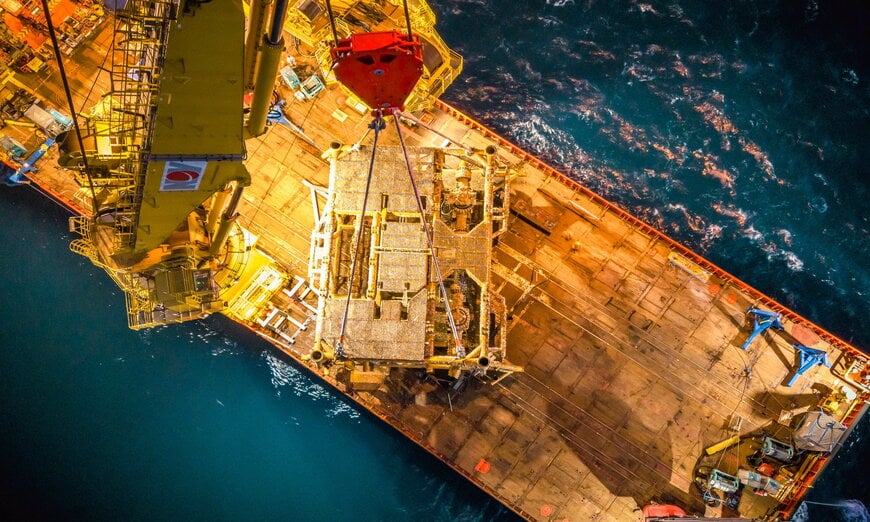
DeepOcean has commenced a subsea decommissioning and disconnection project for a floating production storage and offloading (FPSO) vessel located within the UK sector of the North Sea. The engineering scope encompasses chemical flushing, structural isolation, and the physical disconnection of the asset's digital infrastructure and marine systems to facilitate a safe tow to shore.
Operational Challenges and Partner Roles
The decommissioning of offshore production vessels requires complex engineering to manage structural integrity and environmental hazards simultaneously. For this operation, DeepOcean serves as the primary technical execution partner, managing project engineering from its facility in Aberdeen, UK. TotalEnergies provides the operational framework, building upon methodologies developed during previous joint campaigns on the UK continental shelf.
The primary engineering challenge centers on mitigating risks associated with residual hydrocarbons and structural tension during disconnection. By combining TotalEnergies’ asset data with DeepOcean’s offshore execution capabilities, the project addresses the complex logistics of disconnecting multiple risers, dynamic umbilicals, and mooring chains without compromising environmental safety.
Technical Solution and Disconnection Methodology
The technical solution relies on a diverless execution model originally pioneered during the disconnection of the Gryphon Alpha FPSO. Operating entirely without divers reduces human exposure to high-pressure subsea environments and volatile organic compounds.
The subsea engineering workflow is divided into specific technical phases:
- Flushing and Isolation: Hydrocarbon systems and chemical injection lines undergo flushing to establish verified environmental barriers. Subsea trees, manifolds, and pipeline infrastructure are then isolated.
- Severance and Recovery: Specialized remote intervention tools sever the risers and dynamic umbilicals. Subsea cutting equipment is deployed to disconnect the mooring chains under tension.
- Infrastructure Recovery: Disconnected elements are systematically retrieved to the surface, clearing the path for the FPSO sail-away phase.
The system utilizes proprietary tooling and remote operated vehicles (ROVs) configured to interface with standard subsea architectures. This methodology ensures process stability and predictable load handling during the mechanical severance of structural mooring elements.
Industrial Integration and Expected Impact
The deployment integrates directly with existing North Sea digital infrastructure and subsea marine protocols. By utilizing proven diverless methodologies, the operational framework enhances maintainability and safety metrics during high-risk decommissioning phases.
The implementation builds on technical standards validated in 2025 during the Gryphon recycling project, which demonstrated that automated, remote subsea infrastructure removal can successfully eliminate the need for manual diving operations. This systematized approach provides measurable process efficiency, minimizing vessel days and reducing the overall environmental footprint of offshore asset retirement.
Edited by Evgeny Churilov, Induportals Media - Adapted by AI.
www.deepoceangroup.com
Industrial Integration and Expected Impact
The deployment integrates directly with existing North Sea digital infrastructure and subsea marine protocols. By utilizing proven diverless methodologies, the operational framework enhances maintainability and safety metrics during high-risk decommissioning phases.
The implementation builds on technical standards validated in 2025 during the Gryphon recycling project, which demonstrated that automated, remote subsea infrastructure removal can successfully eliminate the need for manual diving operations. This systematized approach provides measurable process efficiency, minimizing vessel days and reducing the overall environmental footprint of offshore asset retirement.
Edited by Evgeny Churilov, Induportals Media - Adapted by AI.
www.deepoceangroup.com
