
www.oilgastechnology.com
01
'26
Written on Modified on
Golden Pass LNG Train 1 Achieves First Production
McDermott and Chiyoda complete construction and commissioning of the first liquefaction train at the Golden Pass LNG project, marking a key milestone in U.S. export infrastructure.
www.mcdermott.com
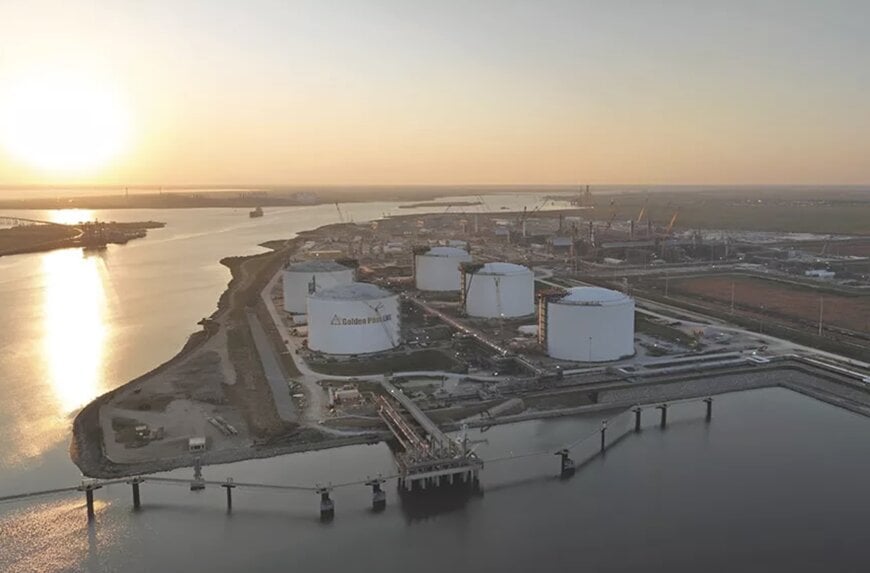
McDermott, in partnership with Chiyoda International Corporation, has completed construction and commissioning of Train 1 at the Golden Pass LNG facility in Sabine Pass, Texas. Start-up operations, led by Golden Pass LNG Terminal LLC, have resulted in the production of first liquefied natural gas (LNG), marking a critical transition from project development to operational phase.
Transition from construction to LNG production
The achievement of “first LNG” indicates that the liquefaction process has been successfully initiated, following completion of engineering, procurement, construction, and commissioning (EPCC) activities. This milestone confirms that core systems—including gas processing, liquefaction, and storage — are functioning as designed.
Liquefaction trains are the primary processing units in LNG facilities, converting natural gas into liquid form by cooling it to approximately −162°C. This enables efficient storage and transportation, particularly for export markets.
Multi-train LNG infrastructure development
The Golden Pass LNG project comprises three liquefaction trains, with the joint venture responsible for delivering all units. With Train 1 operational, construction and commissioning activities continue on Trains 2 and 3. The phased development approach allows progressive ramp-up of production capacity while maintaining continuity in construction and commissioning workflows across the remaining units.
Role in global LNG supply and energy infrastructure
Large-scale LNG projects such as Golden Pass contribute to expanding export capacity and supporting global energy supply chains. By enabling natural gas to be transported across long distances, LNG infrastructure plays a role in balancing regional supply and demand. The completion of Train 1 adds to North America’s liquefaction capacity, reinforcing its position in international LNG markets.
Engineering complexity and project execution
LNG facilities involve complex integration of cryogenic processing systems, storage tanks, and export infrastructure. Successful commissioning requires coordination across multiple engineering disciplines, including mechanical, process, electrical, and control systems. The transition to operational status demonstrates the ability to deliver large-scale energy infrastructure within defined performance and safety parameters.
Ongoing project progression
With Train 1 producing LNG, project efforts now focus on completing and commissioning the remaining trains. Once fully operational, the facility will deliver increased liquefaction capacity, supporting long-term energy export capabilities. This milestone reflects broader trends in LNG development, where modular train-based designs enable scalable expansion of production capacity in response to global energy demand.
Edited by Romila DSilva, Induportals Editor, with AI assistance.
www.mcdermott.com
