
www.oilgastechnology.com
12
'25
Written on Modified on
Offshore Subsea Expansion Increases Oil Output in the Gulf of America
bp enhances deepwater production capacity by integrating two additional wells into the Atlantis subsea network.
www.bp.com
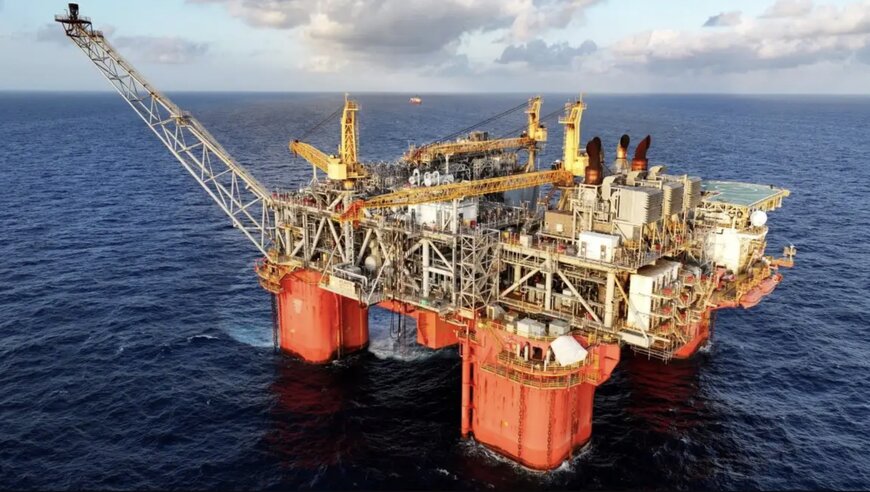
In the upstream energy sector, subsea tiebacks remain a core method for extending the life and productivity of mature offshore fields. The Atlantis Drill Center 1 expansion, delivered by bp in the Gulf of America, illustrates how new wells can be efficiently connected to existing deepwater platforms to increase output without constructing new topside facilities.
The project reached first oil ahead of its original schedule and was developed as an extension of the long-running Atlantis platform. By adding two wells to an existing subsea drill center and linking them via a tieback system, bp expanded the production footprint of a field discovered in 1998—demonstrating how subsea architecture supports incremental recovery in deepwater environments.
Production Impact and Technical Details
The expansion is expected to contribute 15,000 barrels of oil equivalent per day (boe/d) at gross peak annualized average rates. This output is processed through the Atlantis platform, which has a gross production capacity of up to 200,000 barrels per day.
The subsea tieback connects the new wells to existing offshore infrastructure through established pipelines and control systems. Leveraging this infrastructure reduced development requirements and enabled faster execution. bp accelerated delivery by redeploying available subsea inventory, optimizing drilling and completion operations, and streamlining offshore planning—an approach that also helped manage production costs.
Role in bp’s Regional Offshore Strategy
Atlantis Drill Center 1 was one of seven upstream major project start-ups achieved by bp in the same year, and the fifth completed ahead of schedule. The project supports the company’s plan to increase production from the Gulf of America to more than 400,000 boe/d by 2030.
It follows the Argos Southwest Extension subsea tieback, which began production in August 2025, adding around 20,000 boe/d to the Argos platform. Another development—the Atlantis Major Facility Expansion, planned for 2027—aims to further increase output using the existing platform.
How Subsea Tiebacks Benefit Offshore Engineering
The project highlights several engineering advantages associated with subsea tieback developments:
- Field Life Extension: Connecting new wells to existing host facilities allows operators to increase extraction from mature reservoirs.
- Reduced Development Time: Reusing established subsea systems shortens design and fabrication cycles.
- Lower Capital Expenditure: Shared pipelines, risers, and processing systems minimize new hardware needs.
- Smaller Surface Footprint: Fewer new platforms result in lower installation and environmental impact.
These factors make tiebacks a widely used approach in deepwater regions such as the Gulf of America, Brazil’s pre-salt fields, and the West African offshore basin.
Comparable Approaches in Deepwater Development
Other operators in the region—such as Chevron and Shell—deploy similar subsea tieback systems to extend the capacity of existing platforms. Key parameters used by engineers to compare tieback solutions include:
Comparable Approaches in Deepwater Development
Other operators in the region—such as Chevron and Shell—deploy similar subsea tieback systems to extend the capacity of existing platforms. Key parameters used by engineers to compare tieback solutions include:
- Water depth and distance to the host platform
- Compatibility with existing subsea control systems
- Host topside processing capacity
- Reservoir pressure and flow conditions
Because each tieback is tailored to field-specific characteristics, direct product-for-product comparisons are limited, but the development approach is widely recognized across the industry.
Global Context
The Atlantis Drill Center 1 expansion was one of several bp major project startups in the same year across Trinidad and Tobago, the UK North Sea, Egypt, Mauritania, Senegal, and the Gulf of America, contributing to the company’s plan to deliver 10 major project startups globally by 2027.
Global Context
The Atlantis Drill Center 1 expansion was one of several bp major project startups in the same year across Trinidad and Tobago, the UK North Sea, Egypt, Mauritania, Senegal, and the Gulf of America, contributing to the company’s plan to deliver 10 major project startups globally by 2027.
