
www.oilgastechnology.com
06
'25
Written on Modified on
Bosch Rexroth, WITTENSTEIN unveil subsea multiturn actuator
The acquisition-free eSEA Spin actuator enables precise, low-power subsea flow control, reducing costs and supporting offshore hydrogen and CO₂ projects.
www.boschrexroth.com
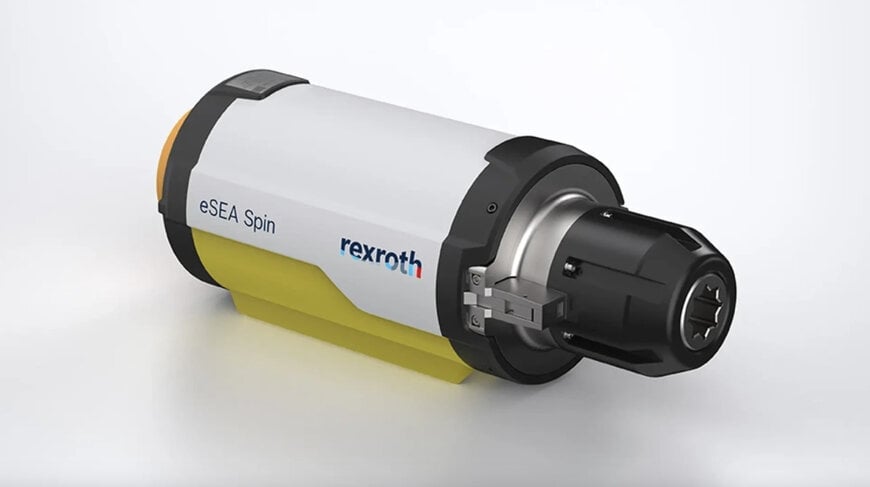
Viable business models for the production of green hydrogen at sea or the storage of CO2 under the seabed (CCS) depend on cost-effective subsea technology. That is why Bosch Rexroth AG and WITTENSTEIN motion control GmbH have jointly developed the electromechanical eSEA Spin subsea actuator for continuously variable flow control of gases and fluids. It is operated at a water depth of up to 4.000 m via a 24 V power supply and therefore doesn’t require any hydraulic pipes from the water surface to the seabed. This reduces both the investment costs for the entire subsea system and the operating costs in the long term.
Joint development based on proven components
The development of the eSEA Spin is not only a technological achievement, but also proof of successful cooperation. By combining the expertise of WITTENSTEIN in the field of gearbox technology with the expertise of Bosch Rexroth in automation and electronics, we are developing solutions that offer real added value for our customers. “Together, we are shaping the future of fully electric actuators in subsea technology,” summarizes Dr. Steffen Haack, CEO of Bosch Rexroth AG.
“Bosch Rexroth and WITTENSTEIN both have many years of proven application experience in the field of subsea technology. Our gearboxes and electromechanical modules are designed for the required service life of more than 25 years in the sea – and have already proven themselves many times over this long period of time,” says Dr. Bertram Hoffmann, CEO of WITTENSTEIN SE.
Electric actuator replaces hydraulics
Previously, valves in subsea systems have mostly been operated by unmanned, remotely operated vehicles (ROVs), or hydraulically and must be supplied with a hydraulic pipe from the water surface. The eSEA Spin is just as compact as hydraulic modules and adjusts throttle valves rotationally with a torque of up to 2700 Nm while only requiring electrical power of maximum 480 watts. The power is supplied to two redundant 24 V motors, each with its own controllers, which generate unlimited rotational movements for precise flow control via a planetary gearbox.
Intelligent software maximizes availability
The robust control electronics are based on a control system from the automotive sector, which is produced in very large quantities and of high quality. In addition, industrial sensors for condition monitoring continuously collect operating data, such as the absolute position and the torque. This enables precise flow control of the valve. “Bosch Rexroth has the software expertise and experience to filter the relevant information from this data, to link them to the integrated digital twins of the components and thus significantly improve the availability of the actuator over the entire period of use,” says Haack.
Standardized interfaces for mechanics and communication
The new actuator features a mechanical ROV Class 4 interface and a SIIS L2 interface for electrical power supply and communication with higher-level systems on the offshore platform. The drive module can be integrated in just a few minutes.
The relocation of functions to the software reduces the complexity and the acquisition costs compared to actuators currently available on the market. The eSEA Spin integrates into the electrical 24 V infrastructure of subsea systems without any additional effort and makes it possible to actuate the valves even at greater distances, known as ‘step-out’ distances. The low energy consumption reduces operating costs over the entire service life. The new actuator complements the eSEA portfolio from Bosch Rexroth for linear and rotary movements that control subsea valves with different functions and requirements. A 24 V power supply is sufficient and a hydraulic system with pipes to the seabed is no longer necessary in the future. This electrification reduces the hurdles for the commercial production of green hydrogen at sea or the storage of CO2 in reservoirs below the seabed.
www.boschrexroth.com
