
www.oilgastechnology.com
13
'23
Written on Modified on
MASDAR AND VERBUND TO EXPLORE DEVELOPING LARGE-SCALE GREEN HYDROGEN PRODUCTION IN SPAIN
Potential green hydrogen produced could be used to decarbonize hard-to-abate industries in Spain and central Europe to meet net-zero goals.
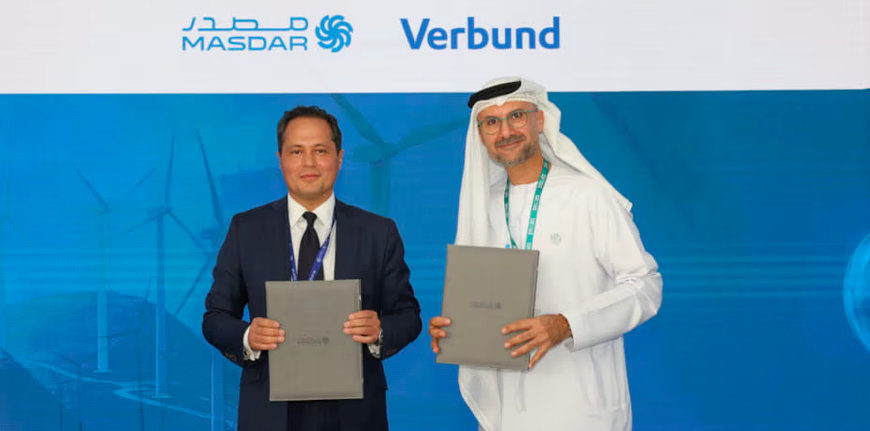
Masdar and VERBUND Green Hydrogen GmbH have signed a deal to explore developing a green hydrogen plant in central Spain to decarbonize Europe’s hard-to-abate sectors.
As world leaders negotiate at the UN’s Climate Change Conference COP28 in the UAE, clean energy pioneers Masdar and VERBUND Green Hydrogen GmbH moved forward with plans to analyze the feasibility of building one of Europe’s largest green hydrogen production plants in central Spain. Harnessing the abundant renewable resources of Castilla-La Mancha region, the prospective plant will aim to generate green hydrogen to cover industrial demand in Spain and central Europe. The study will evaluate if green hydrogen produced at the plant has the potential to displace up to 1 million tonnes of carbon emissions annually, equivalent of removing around 700,000 cars from the road every year.
Green hydrogen is produced using electricity from renewable sources whereby the water is separated into oxygen and hydrogen, via the process of electrolysis. It is intended that the explored plant will produce green hydrogen using renewable energy generated by solar power plants, potentially including Masdar’s planned gigawatt-scale solar plant in Castilla-La Mancha, and onshore wind farms. The project is expected to stimulate job creation and boost green industry in the sparsely populated area.
There is huge growth potential for green hydrogen in Europe. Spain currently consumes around 500,000 tonnes of mainly traditional fuel-derived ‘gray’ hydrogen per year, which could be gradually replaced with green hydrogen. By 2035, Austria alone is expected to require around 600,000 tonnes per year of clean hydrogen.
The planned green hydrogen produced is expected to be used to decarbonize Spain or Europe’s hard-to-abate sectors, which could include steel production, fertilizers, chemicals, heavy transportation, and aviation. Currently, steelmaking alone is responsible for 5 percent of European carbon emissions. With most European Union nations pledging to become carbon neutral by 2050, green hydrogen presents a powerful vehicle for achieving that aim.
Expected to be operational by the end of the decade, the planned green hydrogen plant will serve the industrial sector and has the potential to help decarbonize heavy transportation in Spain as well as in central Europe.
www.masdar.ae
