
www.oilgastechnology.com
18
'26
Written on Modified on
Real-Time Subsea Production Monitoring in Offshore Energy Operations
Equinor and SLB have partnered to deploy digital infrastructure for flow surveillance and leak detection across North Sea subsea networks.
www.slb.com
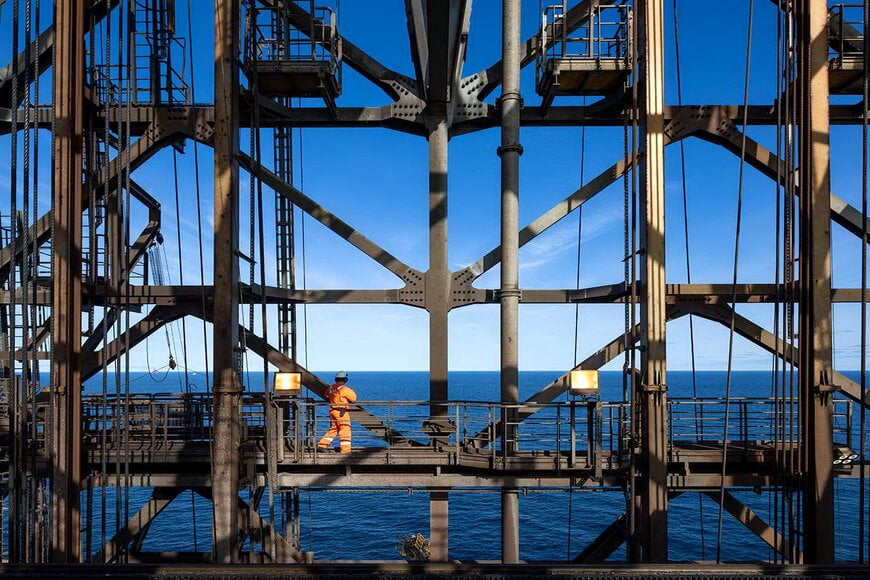
Equinor selected SLB to expand real-time production monitoring, virtual flow metering, and subsea leak detection capabilities for the Johan Sverdrup Phase 3 offshore development. The engineering project implements digital infrastructure across new subsea templates and multiphase flowlines located on the Norwegian Continental Shelf.
Operational Challenges in Subsea Expansions
Large-scale offshore fields require continuous integrity monitoring across interconnected underwater networks. Expanding field architectures increase multiphase fluid routing complexity between deepwater wells and surface processing units. Undetected containment loss or flow imbalances risk structural integrity, environmental non-compliance, and unscheduled downtime. Addressing these operational demands requires integration of thermodynamic simulation models with live field telemetry to identify physical variations within subsea pipelines without interrupting hydrocarbon transport.
Technical Solution and Partner Responsibilities
The monitoring architecture utilizes the Olga Online system, which pairs first-principles multiphase hydrodynamic modeling with real-time operational telemetry. The digital platform continuously evaluates pipeline dynamics to calculate flow rates, fluid behavior, and pressure-temperature gradients without requiring physical downhole flowmeters at every junction.
Under the agreement:
- SLB manages software configuration, pipeline model calibration, commissioning, and continuous technical support.
- Equinor provides subsea telemetry integration, operational infrastructure, and field network access.
The combined platform processes continuous sensor inputs to cross-reference transient multiphase behaviors against baseline models. Discrepancies between calculated and measured pressure drops serve as automated triggers for containment evaluation.
Implementation and Field Architecture
Implementation occurs prior to first oil from the Phase 3 facilities, integrating directly into existing surface and subsea control networks established during Phase 2. The software connects to subsea sensor arrays on newly installed production templates, verifying data transfer across supervisory control interfaces before dynamic hydrocarbons enter the network.
Applications and Operational Impact
The system operates across production wells, transport pipelines, and deepwater manifold structures. Primary use cases include:
Implementation and Field Architecture
Implementation occurs prior to first oil from the Phase 3 facilities, integrating directly into existing surface and subsea control networks established during Phase 2. The software connects to subsea sensor arrays on newly installed production templates, verifying data transfer across supervisory control interfaces before dynamic hydrocarbons enter the network.
Applications and Operational Impact
The system operates across production wells, transport pipelines, and deepwater manifold structures. Primary use cases include:
- Early detection of subsea containment breaches with calculated data on leak location, estimated volume, and discharge rate.
- Virtual flow metering to calibrate individual well contribution without dedicated test separators.
- Steady-state flow assurance to monitor hydrate formation boundaries and slug generation risks.
This analytical capability provides operational transparency across remote subsea assets, maintaining process stability and reducing inspection risks over the extended production lifecycle of the field.
Edited by Evgeny Churilov, Induportals Media - Adapted by AI.
www.slb.com
Edited by Evgeny Churilov, Induportals Media - Adapted by AI.
www.slb.com
