
www.oilgastechnology.com
18
'26
Written on Modified on
Optimization of Process Gas Compression Systems
Aerzen Process Gas GmbH and industrial partners deploy integrated turbomachinery solutions to optimize process gas conveyance systems.
www.aerzen.com
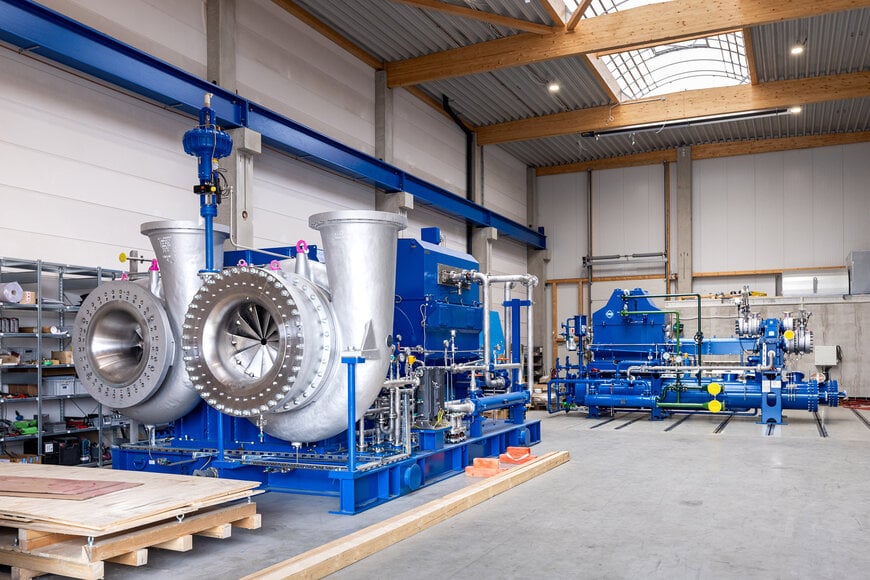
The compression and conveyance of specialized process gases in the petrochemical and industrial gas sectors require high reliability and precise control over varying pressure ratios. Aerzen Process Gas GmbH collaborates with affiliated manufacturing specialists to integrate complete compressor packages tailored for demanding industrial applications. This cooperative effort addresses the technical challenges of interface complexity, extreme operational pressures, and strict compliance with international manufacturing standards in continuous-duty environments.
Technical Solution and Division of Responsibilities
The cooperative framework integrates rotary piston blowers, screw compressors, and turbo machinery into turnkey plant solutions. Aerzen Process Gas GmbH manages the core system engineering, thermodynamic design, and overall plant architecture. Partner entities, including Emmerthaler Apparatebau GmbH and GPE Turbo, contribute specialized manufacturing capabilities for reservoirs, piping, silencers, and high-capacity turbine components.
The system architecture utilizes positive displacement blowers achieving differential pressures up to 2 bar at working pressures up to 25 bar, alongside screw compressors operating up to 25 bar. For high-volume applications, turbo compressors deliver volume flows of up to 350,000 cubic meters per hour and handle pressures up to 300 bar. Control mechanisms rely on standardized industrial interfaces and monitoring telemetry to track thermal parameters, vibration levels, and mass flow rates across onshore and offshore installations.
Implementation and Integration
Deployment occurs across chemical plants, refineries, steelworks, and helium liquefaction facilities. The implementation follows a structured methodology starting with process condition analysis, followed by mechanical integration of custom packages into existing brownfield or greenfield piping networks. Engineering teams coordinate structural alignment, pulsation dampening configuration, and pressure testing in accordance with relevant industrial codes and regulatory specifications.
Applications and Operational Impact
Target application areas encompass chemical processing, oil and gas transport, power generation, and industrial gas production. Concrete technical use cases involve the continuous recirculation, recovery, and pressure boosting of complex gaseous mixtures. The primary operational benefit stems from reducing interface friction and component mismatch by sourcing blowers, compressors, and auxiliary piping from a single entity, which streamlines project execution and ensures long-term operational stability under continuous working loads.
Edited by Sucithra Mani, Induportals editor – adapted by AI.
www.aerzen.com
