
www.oilgastechnology.com
07
'26
Written on Modified on
Advanced Cryogenic and Supercritical Carbon Dioxide Sealing Validation Infrastructure
Greene Tweed expanded internal laboratory facilities to validate high-performance sealing materials under extreme thermal and rapid gas decompression conditions.
www.gtweed.com
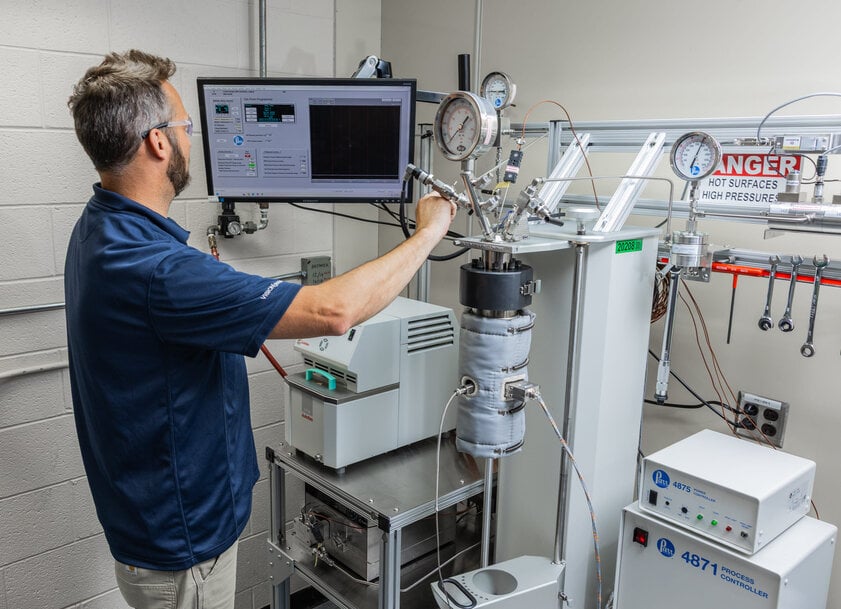
Greene Tweed has introduced specialized cryogenic leak testing and supercritical carbon dioxide rapid gas decompression test apparatuses to validate high-integrity sealing systems. These testing platforms qualify material behavior for hardware operating in aerospace assemblies, semiconductor fabrication equipment, hydrogen transport systems, and carbon capture, utilization, and storage infrastructure.
Industrial Validation Challenges
Components deployed in ultra-low-temperature and high-pressure fluid environments face severe thermo-mechanical stresses. In cryogenic operations, polymer shrinkage and loss of elasticity can cause leak paths, while rapid gas decompression in supercritical fluids induces explosive structural decompression inside elastomers and thermoplastics. Evaluating these physical interactions prior to field assembly requires dedicated in-house environmental chambers that reproduce dynamic operational conditions.
Cryogenic Testing Specifications and Instrumentation
The cryogenic validation facility measures sealing integrity at temperatures down to 4 Kelvin (-269 degrees Celsius) with an active temperature tolerance of plus or minus 0.08 Kelvin. The system integrates a high-vacuum chamber, multi-layer thermal shielding, and helium mass spectrometry leak detection. Helium mass flow rates are measurable down to 5E-12 atm cubic centimeters per second. This instrumentation permits continuous monitoring of thermal contraction, material ductility, and joint interface integrity under simulated deep-space or liquid hydrogen operating regimes.
Supercritical Rapid Gas Decompression Mechanics
To address carbon capture, transport, and sequestration applications, the supercritical carbon dioxide apparatus subjects test specimens to operating pressures up to 5,000 PSI (34.5 MPa) and temperatures up to 350 degrees Celsius. The testing protocol aligns with standard ISO 23936-2 requirements for non-metallic sealing materials exposed to volatile gas media. Test cycles quantify resistance to rapid depressurization, polymer permeability, and micro-blistering in valves, pressure vessels, and transmission compressors.
Industrial Deployment and Application Impact
The integrated test infrastructure accelerates verification intervals by generating empirical performance datasets before final component installation. Measurable leak rates and decompression resistance metrics allow design engineers to mitigate failure risks in extreme fluid handling, ensuring mechanical stability in critical processing equipment.
Edited by Sucithra Mani, Induportals editor – adapted by AI.
www.gtweed.com
