
www.oilgastechnology.com
03
'26
Written on Modified on
Hydrocarbon Recovery Optimization in Mature Well Infrastructure
Baker Hughes entered a multi-year engineering agreement with Oil & Gas Development Company Limited to deploy production optimization systems across legacy assets.
www.bakerhughes.com
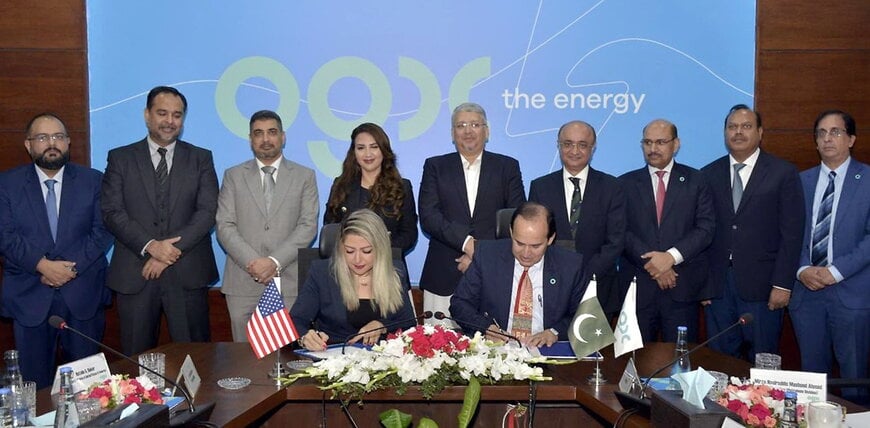
Baker Hughes and Oil & Gas Development Company Limited (OGDCL) have established a long-term cooperation to stabilize and restore production across mature hydrocarbon reservoirs in Pakistan. The initiative focuses on deploying automated recovery methods, well intervention programs, and digital solutions to offset natural field decline.
Operational Challenges in Mature Assets
Late-life oil and gas fields typically experience reduced reservoir pressure, changing gas-to-oil ratios, downhole scale accumulation, and liquid loading. Managing these dynamics across legacy well networks requires reservoir-specific technical evaluation to maintain flow assurance and mechanical integrity.
Addressing these challenges across multiple sites necessitates specialized multidisciplinary reservoir engineering, surface facility coordination, and specialized downhole tools. The partnership combines the localized reservoir ownership and field infrastructure of OGDCL with the diagnostic, intervention, and subsurface modeling capabilities of Baker Hughes.
Technical Scope and Allocation of Responsibilities
The project encompasses diagnostic assessments, customized field redevelopment planning, and intervention execution across more than 120 wells located in the Tando Alam Oil Complex and the Pirkoh gas field.
Baker Hughes is responsible for reservoir engineering evaluations, economic modeling, and deploying well-specific enhancement systems. OGDCL oversees operational access, baseline reservoir historical data integration, and field facility management.
The technical program includes:
- Downhole diagnostic logging and analysis to identify bypassed hydrocarbon zones and structural integrity issues.
- Execution of targeted well workovers and mechanical interventions to restore lift efficiency in low-producing completions.
- Deployment of AI-assisted chemical injection systems to dynamically mitigate paraffin, scale, and hydrate deposition based on real-time fluid parameter monitoring.
- Implementation of continuous flow assurance monitoring to improve hydrocarbon throughput to surface processing units.
Implementation Strategy and Expected Impact
The initial engineering phase evaluates operational bottlenecks and reservoir mechanics across the target well inventory. This data informs asset-level redevelopment plans configured to the operating limits of existing processing infrastructure.
The execution phase implements mechanical workovers alongside digital infrastructure upgrades. By transitioning legacy wells from reactive maintenance to sensor-guided and automated chemical management, the program targets improved flow assurance, extended economic run life, and increased domestic energy extraction.
Edited by Evgeny Churilov, Induportals Media - Adapted by AI.
www.bakerhughes.com
The initial engineering phase evaluates operational bottlenecks and reservoir mechanics across the target well inventory. This data informs asset-level redevelopment plans configured to the operating limits of existing processing infrastructure.
The execution phase implements mechanical workovers alongside digital infrastructure upgrades. By transitioning legacy wells from reactive maintenance to sensor-guided and automated chemical management, the program targets improved flow assurance, extended economic run life, and increased domestic energy extraction.
Edited by Evgeny Churilov, Induportals Media - Adapted by AI.
www.bakerhughes.com
