
www.oilgastechnology.com
13
'26
Written on Modified on
Advanced Oxygen Removal Improves Hydrogen Recovery in Chlor-Alkali Plants
PSB Industries describes an integrated purification approach for reducing oxygen and moisture in hydrogen streams generated during chlor-alkali electrolysis.
psbindustries.com
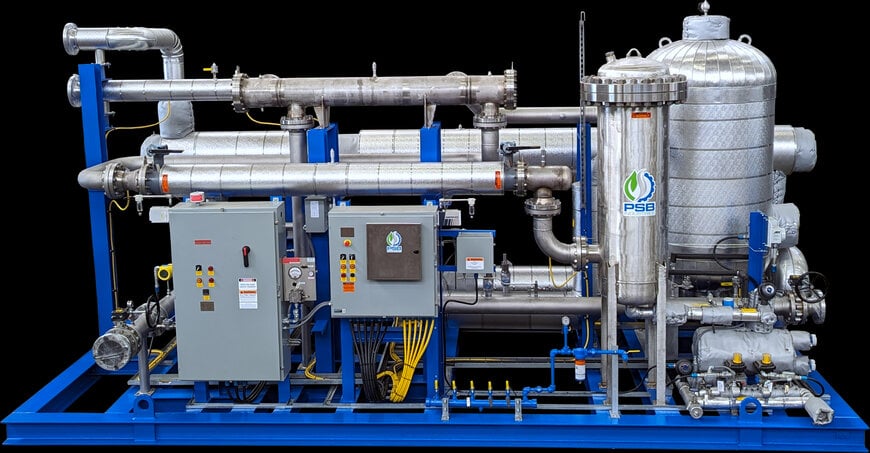
Chlor-alkali electrolysis produces chlorine and caustic soda, with hydrogen generated as a byproduct. As the economic value of hydrogen increases, recovering and purifying this stream becomes an important process-engineering consideration. The technical challenge is not only capturing hydrogen but also removing contaminants to levels suitable for downstream use while limiting additional gas losses.
Hydrogen from chlor-alkali processes can contain oxygen and moisture, together with trace contaminants such as carbon dioxide, carbon monoxide and halogenated species. Oxygen is particularly relevant to downstream purification because elevated concentrations can affect hydrogen recovery in pressure swing adsorption (PSA) systems.
Catalytic oxygen removal and deep drying
PSB Industries’ approach combines catalytic oxygen removal with high-performance drying. The oxygen-removal stage reduces oxygen concentration before the hydrogen reaches downstream purification equipment, while the drying system removes residual moisture generated during the process.
This arrangement shifts part of the impurity-control requirement upstream. Lower oxygen concentrations can reduce the purification load on subsequent PSA units and help limit hydrogen losses associated with purge requirements.
The drying system operates through cyclic adsorption and regeneration. Conventional regeneration at reduced pressure can result in hydrogen losses when gas is depressurized or vented. PSB Industries applies a full-pressure regeneration strategy designed to avoid these losses by maintaining hydrogen within the process during regeneration.
Integration with plant infrastructure
The purification equipment is designed for integration with existing chlor-alkali plant control and automation architectures. PSB Industries states that its systems can be configured according to project-specific specifications and plant requirements, including control-panel and equipment integration.
The company also uses a vertically integrated engineering and fabrication model, allowing purification equipment to be adapted during design and manufacturing. This is relevant to installations where tie-in requirements, equipment specifications or automation interfaces change during project development.
Technical implications for hydrogen processing
The combination of catalytic oxygen removal, deep drying and pressure-preserving regeneration addresses several interconnected aspects of hydrogen purification. Oxygen reduction can support downstream PSA performance, while moisture removal protects the required gas quality. Avoiding depressurization-related losses can additionally improve overall hydrogen recovery.
The technology therefore treats purification as part of the hydrogen-recovery system rather than as an isolated downstream operation. For chlor-alkali producers, the engineering objective is to meet gas-quality requirements while minimizing hydrogen losses across purification, regeneration and downstream processing.
Edited by Sucithra Mani, Induportals editor – adapted by AI.
www.psbindustries.com
