
www.oilgastechnology.com
30
'26
Written on Modified on
Offshore Gas Compression Module for Enhanced Hydrocarbon Recovery
Eni and the National Oil Corporation initiate the Sabratha Compression Project to sustain Libyan gas production.
www.eni.com
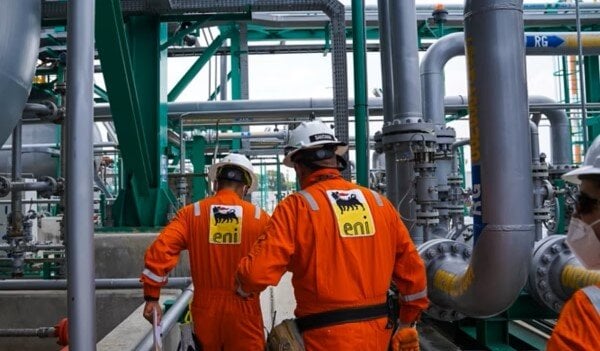
Image Courtesy: egyptoil-gas.com
Eni, in partnership with the Libyan National Oil Corporation (NOC) through the Mellitah Oil & Gas joint venture, has commenced hydrocarbon production via the Sabratha Compression Project. Located approximately 100 kilometers offshore, this development is engineered to sustain and increase natural gas output from the Bahr Essalam gas field.
Module Architecture and Capacity
The project centers on the installation of a 1,600-ton compression module on the existing Sabratha offshore platform. The structural module integrates new compression trains designed to provide an overall compression capacity of approximately 440 million standard cubic feet per day (MMscfd). By enabling production operations under low-pressure conditions, the hardware actively offsets the natural pressure decline of the Bahr Essalam reservoir, thereby maximizing continued hydrocarbon recovery.
Production Output and Regional Infrastructure
The upgraded compression architecture increases production volumes by approximately 800 million cubic meters per year, alongside associated liquid condensate. This output is designated to support Libyan national power generation grids and facilitate continuous exports to Italy via the Greenstream pipeline network. Concurrently, the joint venture is executing two additional regional developments: the Bouri Gas Utilization Project—which is currently undergoing tie-in and commissioning activities following the installation of its Gas Recovery Module—and the Structures A&E project targeting the development of two separate offshore gas fields.
Additional Context: This section details technical specifications not included in the original announcement
In offshore natural gas extraction, reservoir pressure naturally depletes as hydrocarbons are continuously extracted over the lifecycle of the field. When the wellhead pressure drops below the pressure required to flow gas through subsea export pipelines (such as the Greenstream pipeline crossing the Mediterranean), production significantly declines or halts entirely. To counteract this, offshore operators install large-scale compression modules. These modules utilize heavy-duty centrifugal compressors—typically driven by aero-derivative gas turbines or large electric motors—to lower the pressure at the wellhead (creating a suction effect to extract more gas from the rock formation) and subsequently recompress the extracted gas to the high pressure required for pipeline transport. A 1,600-ton topside module of this scale involves highly complex topside integration, requiring heavy-lift crane vessels for installation and incorporating extensive gas scrubbing, cooling, and separation vessels to safely remove liquid condensates before the gas enters the compressor impellers.
Edited by Lekshman Ramdas, Induportals editor – adapted by AI.
www.eni.com
Eni, in partnership with the Libyan National Oil Corporation (NOC) through the Mellitah Oil & Gas joint venture, has commenced hydrocarbon production via the Sabratha Compression Project. Located approximately 100 kilometers offshore, this development is engineered to sustain and increase natural gas output from the Bahr Essalam gas field.
Module Architecture and Capacity
The project centers on the installation of a 1,600-ton compression module on the existing Sabratha offshore platform. The structural module integrates new compression trains designed to provide an overall compression capacity of approximately 440 million standard cubic feet per day (MMscfd). By enabling production operations under low-pressure conditions, the hardware actively offsets the natural pressure decline of the Bahr Essalam reservoir, thereby maximizing continued hydrocarbon recovery.
Production Output and Regional Infrastructure
The upgraded compression architecture increases production volumes by approximately 800 million cubic meters per year, alongside associated liquid condensate. This output is designated to support Libyan national power generation grids and facilitate continuous exports to Italy via the Greenstream pipeline network. Concurrently, the joint venture is executing two additional regional developments: the Bouri Gas Utilization Project—which is currently undergoing tie-in and commissioning activities following the installation of its Gas Recovery Module—and the Structures A&E project targeting the development of two separate offshore gas fields.
Additional Context: This section details technical specifications not included in the original announcement
In offshore natural gas extraction, reservoir pressure naturally depletes as hydrocarbons are continuously extracted over the lifecycle of the field. When the wellhead pressure drops below the pressure required to flow gas through subsea export pipelines (such as the Greenstream pipeline crossing the Mediterranean), production significantly declines or halts entirely. To counteract this, offshore operators install large-scale compression modules. These modules utilize heavy-duty centrifugal compressors—typically driven by aero-derivative gas turbines or large electric motors—to lower the pressure at the wellhead (creating a suction effect to extract more gas from the rock formation) and subsequently recompress the extracted gas to the high pressure required for pipeline transport. A 1,600-ton topside module of this scale involves highly complex topside integration, requiring heavy-lift crane vessels for installation and incorporating extensive gas scrubbing, cooling, and separation vessels to safely remove liquid condensates before the gas enters the compressor impellers.
Edited by Lekshman Ramdas, Induportals editor – adapted by AI.
www.eni.com
