
www.oilgastechnology.com
28
'26
Written on Modified on
Halliburton Launches Sand Control System to Maximize Complex Well Productivity
This single-trip multizone technology reduces completion time by over eight days, lowering costs and operational risks while expanding reservoir coverage in demanding deepwater environments.
www.halliburton.com
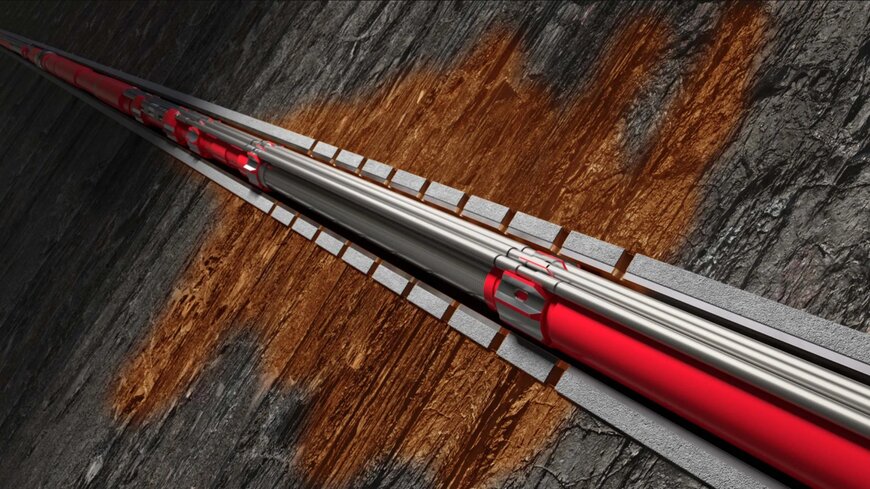
Halliburton launched a single-trip sand control technology designed to optimize multizone well completions by eliminating intermediate tool trips and surface equipment testing. The system targets high-complexity offshore and deepwater oil and gas operations where extending reservoir coverage efficiently is critical to project economics.
Single-Trip Completion Architecture and Efficiency Mechanisms
In deepwater multizone completions, conventional methods require separate service-tool trips and repeated surface-equipment testing for each individual zone. This operational sequence increases rig time and introduces mechanical risks. The new system addresses these challenges by allowing the treatment of multiple intervals within a single trip, completely eliminating deployment-tool repositioning between zones.
By streamlining the completion architecture, the technology delivers full frac-pack functionality—integrating hydraulic fracturing and sand control gravel packing—while minimizing the mechanical spacing required between casing perforations. In a standard three-zone deepwater completion configuration, this integrated design reduces total completion time by more than eight days. Because the system bypasses conventional service-tool manipulation, the time savings scale progressively as the number of targeted zones increases. This reduction in operational days directly lowers total cost of ownership and minimizes personnel exposure on the rig floor.
Operational Reliability and Well Productivity
The design relies on mechanical principles derived from historical data spanning 4,000 completed zones over two decades. The resulting compact downhole geometry allows operators to maximize reservoir access and connectivity in complex, multi-layered formations that were previously marginal or uneconomical to develop.
Conventional sand-control service tools require high-pressure surface tests before and after treating each interval. By removing these requirements, the single-trip framework provides a repeatable operational workflow. This ensures consistent execution in high-pressure, high-temperature environments, translating to enhanced capital efficiency and stabilized initial well productivity.
Additional Context
This section details technical specifications and competitive benchmarking not included in the original product announcement.
The single-trip multizone (STMZ) completion market is benchmarked primarily on pressure ratings, zone fluid-treatment isolation, and the mechanical reliability of shifting tools. Halliburton's system competes directly with established industry solutions, such as the Baker Hughes SC-XP (Single-Trip Multizone) system and the Schlumberger (SLB) Monsoon single-trip system.
While exact pressure and temperature limits vary by casing size, standard deepwater multi-zone sand control systems are typically qualified to operate at pressures up to 10,000 psi (68.9 MPa) and temperatures up to 300°F (149°C). A key differentiator for the OSTMZ system is its elimination of tool repositioning during proppant placement. Competing systems often utilize a multi-position service tool that must be mechanically raised or lowered to isolate the frac-pack sleeve of each zone. By utilizing a design that functions without tool repositioning, Halliburton minimizes the risk of tool-string sticking caused by proppant settling in the annulus, a common failure mode in deepwater gravel packing.
Edited by Evgeny Churilov, Induportals Media - Adapted by AI.
www.halliburton.com
