
www.oilgastechnology.com
26
'26
Written on Modified on
Halliburton RangeStar Service Improves Geothermal Well Spacing And Precision Accuracy
RangeStar enables real-time steering at 175°C (347°F), cutting decision times to minutes. It ensures precise spacing and intercepts for complex well patterns, maximising heat-exchange efficiency.
www.halliburton.com
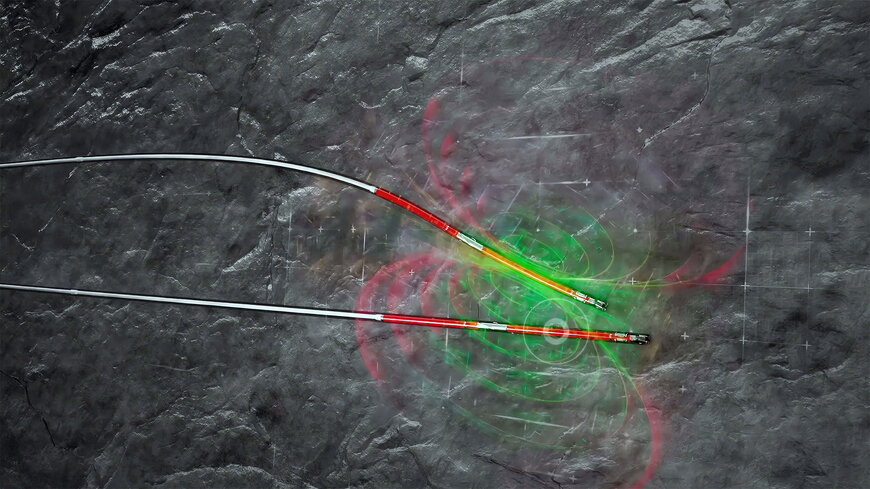
Halliburton introduced the RangeStar service to provide high-resolution magnetic ranging for precise well positioning and multilateral connectivity in complex geothermal environments. This technology enables operators to manage wellbore spacing and execute successful interceptions, which are critical for optimizing heat exchange and maintaining structural integrity in a digital supply chain for renewable energy.
Precision Ranging for Geothermal Heat Exchange
The development of geothermal energy often requires the creation of complex well patterns, such as U-tube configurations or dense clusters of collector wells, to maximize thermal extraction. The RangeStar service addresses the technical challenge of maintaining specific distances between wellbores or achieving a direct "bit-to-bit" intercept. By utilizing magnetic ranging sensors and specialized processing algorithms, the system identifies the relative position of an adjacent well at distances exceeding 200 feet (61 meters). This capability allows for real-time steering adjustments, ensuring that the wellbore trajectory remains within the tight tolerances required for efficient thermal conductivity.
Technical Mechanism and Environmental Resistance
Standard magnetic ranging often faces limitations in high-temperature environments typical of geothermal reservoirs. The RangeStar service utilizes proprietary sensors designed to maintain signal integrity at temperatures reaching 175°C (347°F). The system operates by detecting the magnetic interference pattern generated by the target well’s casing or a dedicated magnetic source. Unlike passive ranging techniques that may suffer from signal attenuation in deep or complex formations, this service uses active ranging data to calculate the distance and direction between the drilling bit and the target. This provides a measurable reduction in elliptical uncertainty, which is the mathematical margin of error in traditional survey methods.
Application in Multilateral and Closed-Loop Systems
A primary use case for this technology is the construction of closed-loop geothermal systems, where two separate wellbores must meet at a precise subterranean point to create a continuous flow path. The service provides the directional accuracy necessary to execute these interceptions on the first attempt, reducing the need for costly sidetracks or remedial drilling. In addition to interception, the technology is applied to "avoidance drilling," where new wells must be placed close to existing infrastructure without risking a collision. This level of precision is essential for the automotive data ecosystem and industrial sectors that rely on consistent geothermal baseload power.
Enhanced Data Integration for Wellbore Construction
The service integrates with existing measurement-while-drilling (MWD) and logging-while-drilling (LWD) platforms. By combining ranging data with real-time formation evaluation, operators can adjust the digital twin of the well plan dynamically. Jeff Miller, Chairman, President, and CEO of Halliburton, noted that the service applies the company’s experience in complex well construction to the specific demands of the geothermal sector, facilitating the development of larger-scale thermal projects. The implementation of such high-accuracy ranging tools supports the transition toward more predictable and scalable carbon-neutral energy production.
www.halliburton.com
