
www.oilgastechnology.com
26
'26
Written on Modified on
Integrated Control Improves Gas Reliability
Using Rockwell Automation’s integrated control and safety system, a remote LNG plant in Brazil improved operational reliability, safety, and high-availability production with unified monitoring and SIL 2 compliance.
www.rockwellautomation.com
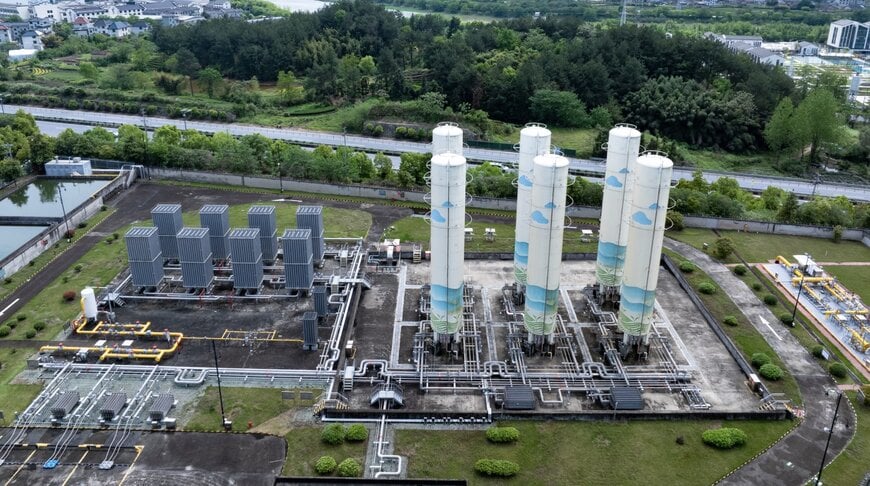
Application Area: Integrated Control and Safety Systems (ICSS), Natural Gas Liquefaction Process Automation, Hydrate Management Systems
Industry Sector: Oil and Gas, Liquefied Natural Gas (LNG) Production, Energy Utilities
A remote Brazilian gas liquefaction facility implemented Rockwell Automation technology to optimize system reliability and meet SIL 2 safety standards under extreme equatorial conditions.
Overcoming Equatorial Environmental Stress and Hydrate Formation Risks
Industrial processing within remote, equatorial regions introduces severe operational and environmental challenges. At a remote natural gas liquefaction facility in Brazil, high ambient temperatures, extreme humidity levels, and frequent electrical grid disturbances combined to create highly unstable operating conditions. Because the facility is completely isolated from robust regional infrastructure, maintaining continuous power availability and reliable external communications presented constant logistical difficulties.
Simultaneously, the facility required precise control of the natural gas liquefaction process to manage high-consequence pipeline dynamics. Uncontrolled fluctuations in system pressure and temperature present immediate risks of hydrate formation—solid crystalline structures that cause severe line blockages and catastrophic safety vulnerabilities. Historically, the plant managed these risks across multiple, siloed automation platforms and independent vendor technologies. This multi-platform fragmentation created complex cross-system communications, elevated maintenance overhead, and made it difficult for operators to systematically verify safety loop integrity or maintain high system uptime. To resolve these operational vulnerabilities, secure long-term lifecycle supportability, and fulfill strict safety regulations, the plant initiated an automation infrastructure migration.
Deploying Rockwell Automation ICSS Environment for Operational Stability
The deployment of a comprehensive integrated control and safety solution built on Rockwell Automation technology transformed the remote facility's processing lines into a centralized, resilient digital architecture:
- Unified Control and Safety Convergence: The solution integrated a Process Control System (PCS), Safety Instrumented System (SIS), and fire and gas systems within a single, cohesive architecture. By leveraging this centralized control setup, the plant eliminates data translation interfaces between process loops and safety logic, simplifying overall communication paths and reducing operational complexity.
- Real-Time Data Visualization and Supervision: FactoryTalk® View SE serves as the primary operator interface, delivering real-time visualization of system data across all plant operations. This unified dashboard allows technicians to monitor the entire facility centrally, enabling them to identify anomalous process shifts quickly and execute coordinated corrections across interconnected subsystems.
- Hardware Redundancy and Environmental Protection: To maintain high availability during localized electrical disturbances or equipment faults, the configuration implements a fully redundant architecture. The robust physical infrastructure is explicitly engineered with ruggedized shielding to withstand extreme equatorial conditions, promoting long-term reliability and reducing emergency maintenance intervals.
- Automated Hydrate Mitigation: The integrated logic engine runs continuous automated hydrate management routines. By tracking pressure and temperature thresholds in real time, the advanced process management software maintains the exact thermodynamic conditions required for stable, interruption-free liquefied natural gas (LNG) production while maintaining full compliance with SIL 2 safety standards.
Additional Context
This section details technical specifications not included in the original case study.
Operational Capabilities of Integrated Control and Safety Systems
Traditional oil and gas automation frameworks segregate the Basic Process Control System (BPCS)—responsible for continuous dynamic adjustments—from the Safety Instrumented System (SIS), which remains a static layer designed exclusively for emergency shutdowns. Splitting these systems often introduces distinct software tools, separate communication protocols, and unique spare parts inventories.
Transitioning to an integrated control and safety system (ICSS) consolidates the logic solver functions while preserving strict programmatic independence. By using a single architecture, engineers achieve deep access to system diagnostics without introducing third-party data drivers. This setup provides deterministic execution speeds because safe data transport passes over certified, high-speed safety buses rather than through unverified network bridges. In complex chemical configurations, such unified monitoring ensures that preventative interlocks trigger well within critical process safety times, mitigating the occurrence of unmanaged shutdowns and protecting structural equipment integrity.
Structural Comparison of Automation Architectures
Transitioning from standard decoupled process control and safety hardware to an integrated ICSS infrastructure alters core structural benchmarks across industrial processing plants:
This section details technical specifications not included in the original case study.
Operational Capabilities of Integrated Control and Safety Systems
Traditional oil and gas automation frameworks segregate the Basic Process Control System (BPCS)—responsible for continuous dynamic adjustments—from the Safety Instrumented System (SIS), which remains a static layer designed exclusively for emergency shutdowns. Splitting these systems often introduces distinct software tools, separate communication protocols, and unique spare parts inventories.
Transitioning to an integrated control and safety system (ICSS) consolidates the logic solver functions while preserving strict programmatic independence. By using a single architecture, engineers achieve deep access to system diagnostics without introducing third-party data drivers. This setup provides deterministic execution speeds because safe data transport passes over certified, high-speed safety buses rather than through unverified network bridges. In complex chemical configurations, such unified monitoring ensures that preventative interlocks trigger well within critical process safety times, mitigating the occurrence of unmanaged shutdowns and protecting structural equipment integrity.
Structural Comparison of Automation Architectures
Transitioning from standard decoupled process control and safety hardware to an integrated ICSS infrastructure alters core structural benchmarks across industrial processing plants:
- Data and Path Synchronization: Under a traditional separate DCS and SIS architecture, data synchronization is highly fragmented, as process tags, diagnostic metrics, and alarm logs must be manually mapped across different software databases and distinct physical communication links. Conversely, an integrated control platform provides fully unified data synchronization, utilizing a shared tag database and standard software tools to provide real-time variable transparency across process control, safety, and fire and gas tasks.
- Safety and Regulatory Compliance: Legacy decoupled systems exhibit high validation complexity, demanding separate third-party safety certifications and manual validation testing of cross-system network bridges to achieve functional safety levels. An ICSS layout features simplified validation, leveraging factory-certified, unified safety modules that natively meet international standards up to SIL 2 and SIL 3, which speeds up initial commissioning and routine loop testing.
- Lifecycle and Spare Parts Management: Traditional multi-vendor installations suffer from high inventory and maintenance costs due to specialized training requirements for independent platforms and the need to stock completely different spare processors, input-output modules, and power supplies. An integrated configuration delivers continuous asset optimization, employing standard hardware components and a single configuration workspace to lower fixed administrative overhead and streamline field service tasks in remote locations.
Edited by Romila DSilva, Induportals Editor, with AI assistance.
