
www.oilgastechnology.com
20
'26
Written on Modified on
Burckhardt Compression strengthens compressor field services
Proactive, data-driven maintenance strategies enhance reliability and reduce downtime in gas and hydrogen operations.
www.burckhardtcompression.com
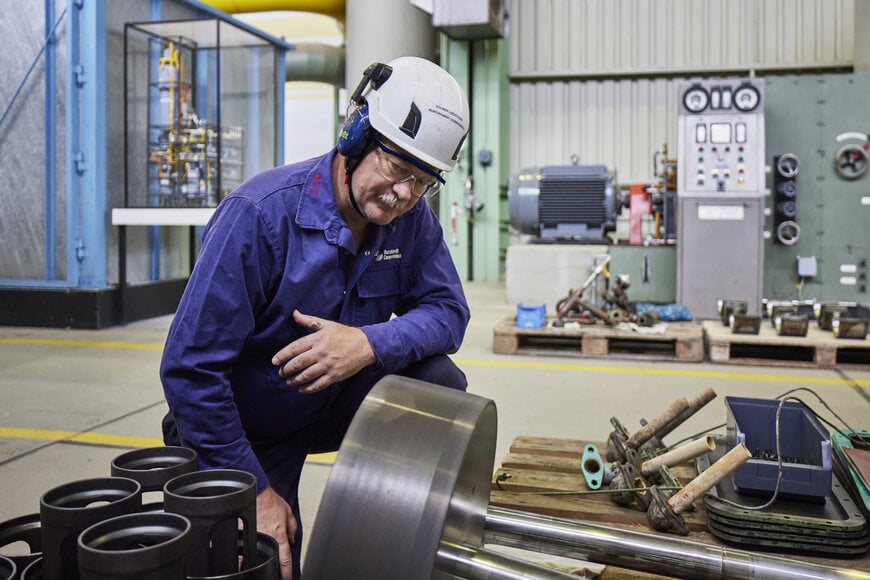
Field service teams bring knowledge, training, and specialized tooling to site, reducing time and costs.
In gas storage and transportation, reciprocating compressors are mission-critical assets. Operating under high pressures and continuous duty cycles, these complex machines—comprising pistons, valves, cylinders, crankshafts and advanced control systems—require specialist maintenance to ensure consistent performance. In this environment, field services have evolved from reactive repair support into a strategic pillar of long-term operational reliability.
Travis Shull and David Mason, Account Managers in the Services Division at Burckhardt Compression, highlight how compressor operators are increasingly prioritizing tailored service programs that align with business objectives, not just equipment requirements.
From reactive repair to strategic maintenance
Unexpected failures—such as seized pistons, cracked valves or bearing damage—can trigger costly downtime, missed supply commitments and regulatory risks. Modern field service programs focus on proactive maintenance to prevent such disruptions. Service Level Agreements (SLAs) with uptime targets, lifecycle cost modelling and structured support across multiple assets provide operators with financial predictability and operational stability.
Inventory optimization and long lead-time parts planning are also critical. By ensuring essential components are available on-site, operators can significantly reduce recovery time during planned and unplanned interventions. Complementary training programs further strengthen in-house capabilities, enabling early fault detection and supporting a proactive maintenance culture.
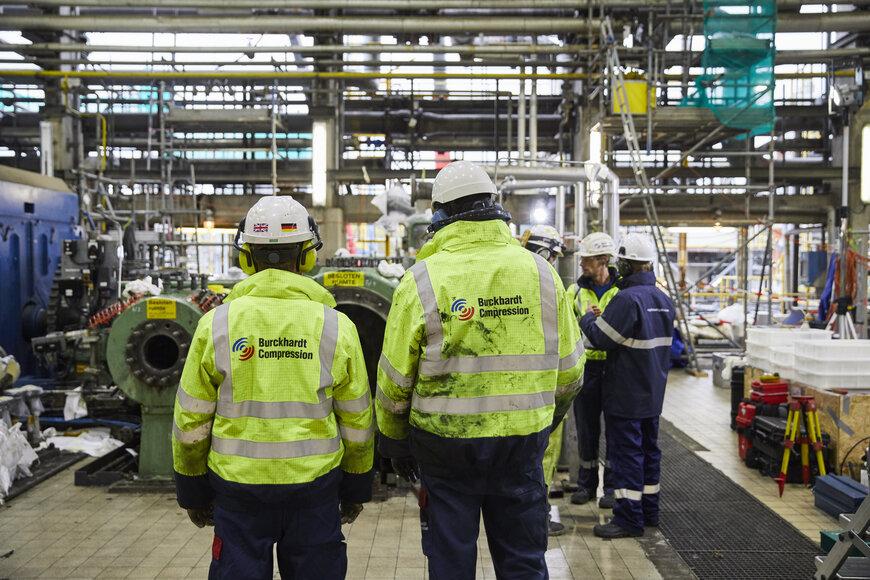
Smooth on-site overhauls are the culmination of in-depth planning and effective organization.
Flexibility and domain expertise on site
Field service teams deliver OEM-level expertise directly at compressor stations, eliminating the need to transport heavy equipment to workshops. Rapid mobilization, even in remote or challenging environments, minimizes downtime and ensures continuity of operations.
Modern maintenance strategies increasingly rely on condition monitoring and remote diagnostics. Real-time data allows service teams to detect trends and anticipate failure modes before breakdowns occur. Scheduled overhauls are now determined by duty cycles and operational data rather than fixed calendar intervals, improving reliability while reducing unnecessary interventions.
Root cause failure analysis and performance benchmarking further refine maintenance strategies, helping operators optimize gas throughput, reduce energy consumption and extend equipment life.
Hydrogen networks demand high availability
The rapid expansion of hydrogen infrastructure underscores the importance of reliable compressor performance. Filling stations and distribution hubs depend on uninterrupted compressor operation to maintain delivery schedules. Downtime can result in logistical backlogs and contractual penalties.
In one case, proactive planning—including identifying critical long lead-time components—proved decisive. When valve temperature issues emerged during a holiday period, a field engineer was deployed within 24 hours. Spare parts already stored on site enabled same-day restoration of operations, reinforcing the value of preparation and trusted partnerships.
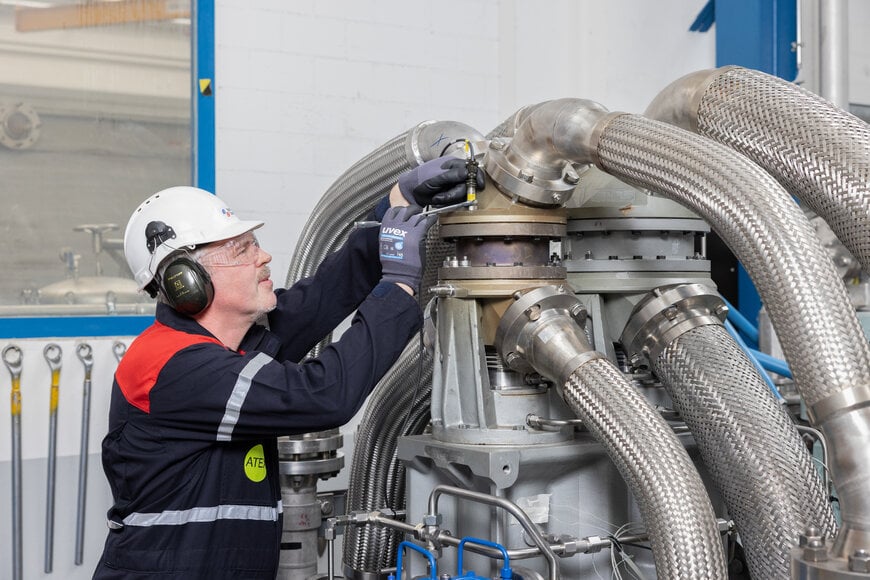
Digital services support predictive maintenance and are the future of compressor maintenance.
Expertise reduces lifecyclecosts
In another example, a chemical company operating 14 compressors in a polypropylene process sought to reduce escalating maintenance costs caused by inadequate service execution. A structured maintenance program led by experienced technicians restored confidence through disciplined planning, technical precision and adherence to project timelines—reducing both labor overruns and production losses.
Technicians play a central role in building lasting customer relationships. Their technical knowledge, responsiveness and commitment directly impact operational reliability. Beyond mechanical repairs, advanced service capabilities now include control system diagnostics, pulsation analysis and API-compliant assessments, delivering a holistic approach to compressor care.
A broader, data-driven outlook
As expectations in the gas industry continue to rise, field service partners must combine global support networks with local responsiveness. Digital services, predictive analytics and performance benchmarking are becoming essential components of long-term reliability strategies.
For operators reliant on reciprocating compressors, the maintenance partner of the future will be data-driven, strategically aligned and focused on maximizing uptime. By integrating technical expertise, proactive planning and digital monitoring, field services can transform compressor maintenance from a cost center into a driver of operational resilience and competitive advantage.
www.burckhardtcompression.com
In gas storage and transportation, reciprocating compressors are mission-critical assets. Operating under high pressures and continuous duty cycles, these complex machines—comprising pistons, valves, cylinders, crankshafts and advanced control systems—require specialist maintenance to ensure consistent performance. In this environment, field services have evolved from reactive repair support into a strategic pillar of long-term operational reliability.
Travis Shull and David Mason, Account Managers in the Services Division at Burckhardt Compression, highlight how compressor operators are increasingly prioritizing tailored service programs that align with business objectives, not just equipment requirements.
From reactive repair to strategic maintenance
Unexpected failures—such as seized pistons, cracked valves or bearing damage—can trigger costly downtime, missed supply commitments and regulatory risks. Modern field service programs focus on proactive maintenance to prevent such disruptions. Service Level Agreements (SLAs) with uptime targets, lifecycle cost modelling and structured support across multiple assets provide operators with financial predictability and operational stability.
Inventory optimization and long lead-time parts planning are also critical. By ensuring essential components are available on-site, operators can significantly reduce recovery time during planned and unplanned interventions. Complementary training programs further strengthen in-house capabilities, enabling early fault detection and supporting a proactive maintenance culture.
Smooth on-site overhauls are the culmination of in-depth planning and effective organization.
Flexibility and domain expertise on site
Field service teams deliver OEM-level expertise directly at compressor stations, eliminating the need to transport heavy equipment to workshops. Rapid mobilization, even in remote or challenging environments, minimizes downtime and ensures continuity of operations.
Modern maintenance strategies increasingly rely on condition monitoring and remote diagnostics. Real-time data allows service teams to detect trends and anticipate failure modes before breakdowns occur. Scheduled overhauls are now determined by duty cycles and operational data rather than fixed calendar intervals, improving reliability while reducing unnecessary interventions.
Root cause failure analysis and performance benchmarking further refine maintenance strategies, helping operators optimize gas throughput, reduce energy consumption and extend equipment life.
Hydrogen networks demand high availability
The rapid expansion of hydrogen infrastructure underscores the importance of reliable compressor performance. Filling stations and distribution hubs depend on uninterrupted compressor operation to maintain delivery schedules. Downtime can result in logistical backlogs and contractual penalties.
In one case, proactive planning—including identifying critical long lead-time components—proved decisive. When valve temperature issues emerged during a holiday period, a field engineer was deployed within 24 hours. Spare parts already stored on site enabled same-day restoration of operations, reinforcing the value of preparation and trusted partnerships.
Digital services support predictive maintenance and are the future of compressor maintenance.
Expertise reduces lifecyclecosts
In another example, a chemical company operating 14 compressors in a polypropylene process sought to reduce escalating maintenance costs caused by inadequate service execution. A structured maintenance program led by experienced technicians restored confidence through disciplined planning, technical precision and adherence to project timelines—reducing both labor overruns and production losses.
Technicians play a central role in building lasting customer relationships. Their technical knowledge, responsiveness and commitment directly impact operational reliability. Beyond mechanical repairs, advanced service capabilities now include control system diagnostics, pulsation analysis and API-compliant assessments, delivering a holistic approach to compressor care.
A broader, data-driven outlook
As expectations in the gas industry continue to rise, field service partners must combine global support networks with local responsiveness. Digital services, predictive analytics and performance benchmarking are becoming essential components of long-term reliability strategies.
For operators reliant on reciprocating compressors, the maintenance partner of the future will be data-driven, strategically aligned and focused on maximizing uptime. By integrating technical expertise, proactive planning and digital monitoring, field services can transform compressor maintenance from a cost center into a driver of operational resilience and competitive advantage.
www.burckhardtcompression.com
